Best Real-Time Prize APIs for Betting & Fantasy October 2026
Your biggest retention problem isn't your odds or your contest structure. It's the three-day wait between a player winning and seeing money in their account. Every hour after a win, players wonder if your service will actually pay. A real-time payments API for sports betting fixes that trust gap by settling winnings before the next game starts, turning payout anxiety into the kind of instant gratification that drives repeat deposits and referrals.
TLDR:
- Real-time payout APIs settle winnings in seconds via RTP, FedNow, UPI, and PIX networks
- Dots supports 300+ rails across 190 countries with automated KYC and 1099 filing
- Stripe covers 46 countries but adds 1-1.5% instant fees and imposes a 10-per-day cap
- Dots offers mid-market FX with no markup and goes live in under one week
What Are Real-Time Prize Distribution APIs?
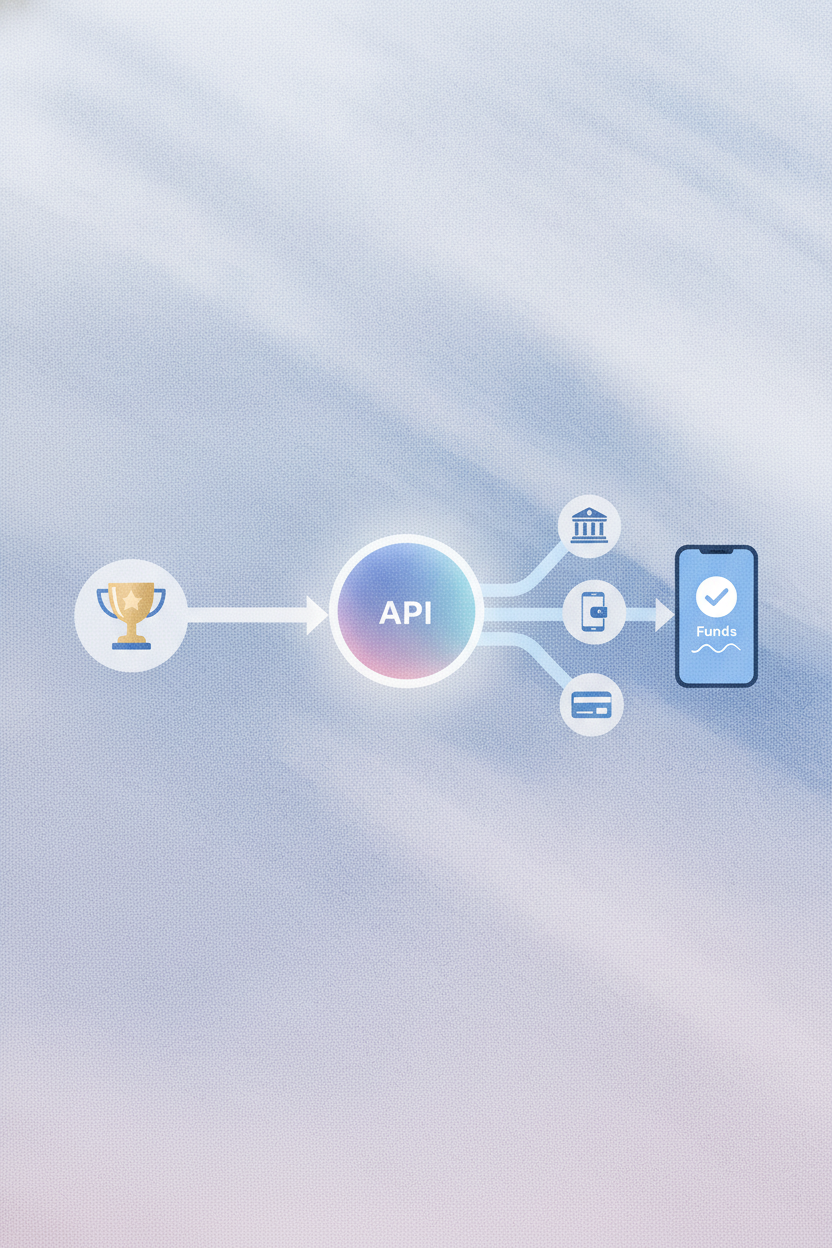
Real-time prize distribution APIs are payments APIs that send winnings to users instantly when a contest ends. Instead of waiting days for batch processing, a single payment integration connects your app to payment networks and executes transfers within seconds.
When a user wins, the API receives the payout instruction, verifies identity and payment details, calculates the amount after fees or tax withholding, and routes funds to their bank account, digital wallet, or debit card. This happens through a few lines of code.
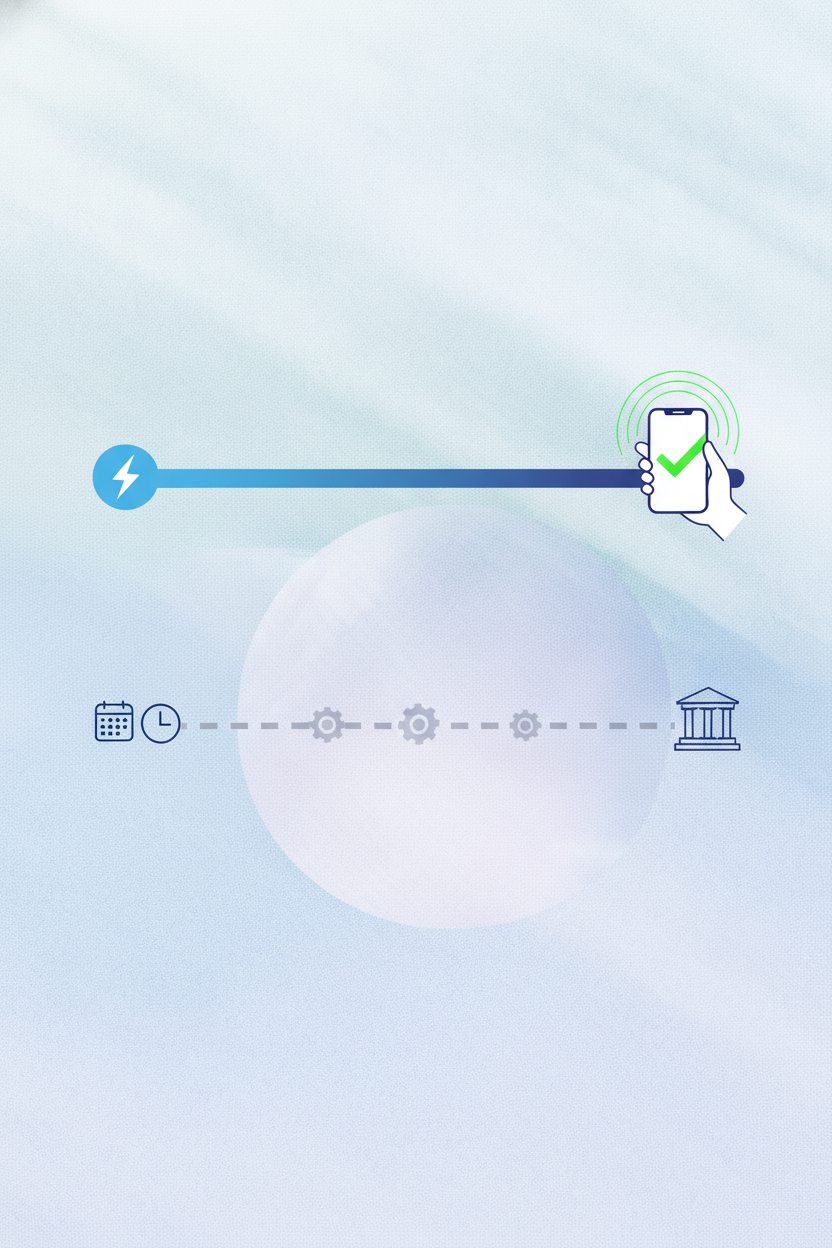
Speed matters because your users expect money fast. Fantasy football contests pay out large prize pools every week, and any friction between winning and receiving funds hurts retention. Manual workflows create delays: account verification takes 24 hours, security checks add another layer, and ACH needs 2-3 business days to settle.
A real-time API removes that wait. Users who cash out Friday night see funds arrive before they leave the bar, turning one-time players into repeat depositors.
How Sweepstakes Services Handle Prize Fulfillment and Winner Verification
Most sweepstakes programs follow a similar path from draw to delivery. A winner gets selected, then contacted by email, text, or phone, then verified, then paid or shipped a prize.
Winner selection happens through random drawing software or weighted entry systems, depending on the contest rules. Once a winner is chosen, the operator reaches out through the channel the entrant provided during signup, often layering email with a text or call to raise response rates.
Verification protects the program from fraud and confirms the winner meets eligibility rules before any prize moves. A typical verification flow includes several checks before a prize ships or funds get sent.
- Digital affidavit of eligibility confirming the entrant qualifies under contest rules
- Signed release forms covering liability and publicity
- Government ID check to confirm identity
- Selfie match against the submitted ID
- A response deadline, typically 5 to 7 days, before the claim expires
- An alternate winner gets selected if the original winner does not respond in time
Prize delivery splits into two paths once verification clears. Digital prizes move as cash payouts through APIs like the ones reviewed in this article, while physical prizes require shipping logistics or gift-with-purchase fulfillment handled by a warehouse or retail partner.
Some all-in-one services such as Snipp or Sweeppea manage entry mechanics, eligibility, fraud controls, and physical fulfillment from start to finish. Payout APIs like Dots focus on instant cash and winnings distribution once a winner clears verification, pairing well with those services for programs that need both prize logistics and fast money movement.
How We Ranked These APIs
We scored each API across six criteria that matter when you're moving winnings every week.
Geographic coverage tells you how many countries and local rails the API supports. A service that only does U.S. bank transfers won't work if your users are in Brazil or India.
Settlement speed distinguishes between instant and batch processing. ACH takes days, while real-time rails like RTP (Real-Time Payments), FedNow (the Federal Reserve's instant payment service), UPI (India's Unified Payments Interface), and PIX (Brazil's instant payment system) settle in seconds. The RTP network now supports transactions up to $10 million, so even the largest prize pools fit on a real-time rail.
Pricing transparency means flat fees and clear rate cards, not hidden FX markups or percentage-based pricing that eats into margins at scale.
Developer experience covers API documentation quality, sandbox access, and time from test mode to production.
Compliance tooling asks whether the API automates KYC (Know Your Customer) checks, AML (Anti-Money Laundering) screening, tax form collection, and fraud detection, or if you need to add those separately. Florida and New York each require sweepstakes sponsors to register and post a surety bond (a financial guarantee that prizes will be paid) when total prize value exceeds $5,000, under Florida's game promotion filing rules and New York General Business Law 369-e. Automated KYC and AML checks plus fraud detection reduce multi-account abuse in high-volume promotions by blocking duplicate identities before a prize is paid.
Rail diversity measures payout flexibility. Payment rails are the networks that move money, such as ACH, RTP, and card networks, and the best APIs let winners choose bank accounts, Venmo, CashApp, or digital wallets. Fantasy football contests pay out large prize pools every week, so payout reliability is non-negotiable.
All-in-One Sweepstakes Services vs. Dedicated Payout APIs
Some contest operators bundle every function under one contract, while others pair a focused payout API with separate tools for entries and legal review. The right choice depends on whether you need physical prizes or fast cash disbursement.
All-in-one sweepstakes services (entry mechanics, legal compliance, winner verification, and prize fulfillment under one contract)
Pros
- Fewer vendors to coordinate for physical prizes.
- Official rules and legal compliance handled in one place.
- Winner verification and fraud controls bundled.
Cons
- Typically no real-time payment rails.
- Slower, batch-style cash payouts.
- Higher cost when cash is the main prize.
Dedicated real-time payout APIs (Dots, Stripe, Tipalti, Trolley)
Pros
- Instant settlement on real-time rails.
- Lower foreign exchange costs and transparent pricing.
- Fast integration with compliance tooling.
Cons
- Need a separate solution for entry management.
- Need separate official rules and state registration support.
- No physical prize fulfillment.
Best Overall API for Real-Time Prize Distribution: Dots
Dots is the only payout API built for instant winnings distribution. You can reach winners in 190 countries using 300+ payment rails, including RTP, FedNow, UPI, PIX, M-PESA, digital wallets, and stablecoins. Payouts arrive in seconds instead of waiting days for ACH to clear.
You'll go live in under a week because Dots handles KYC checks, tax filing (including 1099s, the US tax forms that report payments to non-employees), and all payee support through a white-label onboarding flow. Your team stops fielding "where's my money?" tickets.
Winners can choose their preferred withdrawal method at checkout: bank account, Venmo, Cash App, or mobile money. Dots routes each payout through whichever network moves fastest in that country.
Prizes extend beyond cash too. Operators can pair Dots payouts with digital wallet credits, stablecoin prizes, or gift card and merchandise credit rewards, letting winners pick a preferred method while Dots routes the cash portion through the matching rail.
Pricing is simple: $999 per month, flat domestic fees, and percentage-based international rates at the mid-market exchange rate (the midpoint between buy and sell prices, as published by Google) with no hidden spreads. Automated 1099 e-filing handles TIN (Taxpayer Identification Number) matching, W-9 (US tax identification form) collection, and form submission, so you skip the manual paperwork every January if you run DFS contests or peer-to-peer wagering.
Stripe
Stripe Connect and Stripe Payouts route funds across 46 countries with payout support. The service integrates easily if you already run Stripe for deposits, but, according to Stripe's published pricing, costs 0.25% + $0.25 per payout, adds 1% on cross-border FX, and layers an extra 1 to 1.5% per Instant Payout to supported debit cards in nine regions. Instant Payouts face a 10-per-day cap, and standard settlement runs 1 to 5 business days via ACH or wire.
What They Offer
- Payout API covering 46 countries with card and bank transfer options
- Instant Payouts to debit cards in nine regions (with surcharge)
- Automated KYC and compliance tooling for connected accounts
- Strong documentation and webhook infrastructure
Stripe fits betting or fantasy apps already processing deposits through its stack and serving North America or Western Europe, where multi-day ACH settlement works. See the full Dots vs. Stripe Connect breakdown for rail and fee details.
Limitation: No real-time rails like RTP, UPI, or PIX. Instant payouts carry a 1-1.5% surcharge, face daily caps, and cross-border moves add 1% FX markup.
Tipalti
Tipalti is an accounts payable automation suite that processes supplier and contractor payments across 200 countries using roughly 50 rails, mainly ACH and wire transfers. The service targets finance teams managing invoices and approvals, not high-frequency prize disbursements. Domestic settlements take 1-3 days and cross-border transactions clear in 1-5 days, while FX fees run roughly 1.9% to 3.2% depending on transaction size, according to Tipalti's estimated FX fees. Bank onboarding typically takes 4-6 weeks, per this Tipalti pricing review.
Tipalti handles AP automation with batch scheduling, tax compliance (1099s), payee onboarding portals, and reporting dashboards for finance operations. It fits companies that process vendor invoices through centralized AP workflows instead of instant user payouts.
The catch: batch ACH and wire settlement require days, not seconds. FX spreads cut into international winnings. Implementation timelines delay launches. The branded payee portal isn't white-label, and Tipalti doesn't support instant rails like RTP, UPI, or PIX. Betting and fantasy operators distributing thousands of instant prizes need real-time settlement and transparent FX. For a side-by-side view, read Dots vs. Tipalti.
Trolley
Trolley provides cross-border payouts to 210 countries and 135 currencies via bank transfers, wire transfers, PayPal, and Venmo. The service charges a $49 monthly SaaS fee, per-transaction costs (wires cost $10 with FX), and a 2% FX markup. Bank rails require a 4-6 week onboarding before they go live, pushing back launch timelines. Payouts are settled via ACH and international wire in 1-5 days.
What They Offer
- 210-country coverage with 135 currencies and white-label payee portals for recipient self-service
- Tax compliance tools with 1099 automation to handle year-end reporting
- Bank transfers, wires, PayPal, and Venmo for flexibility across recipient preferences
Trolley works for small teams with low monthly volumes who can absorb 4-6 week onboarding and multi-day settlement windows. The 2% FX markup and $10+ wire fees add up fast at scale, and you'll handle all payee support inquiries yourself. Compare onboarding time and FX costs in Dots vs. Trolley.
Feature Comparison Table of Real-Time Prize Distribution APIs
Here's how the four APIs stack up across the features that matter most when you're paying winners every day.
Feature | Dots | Stripe | Tipalti | Trolley |
|---|---|---|---|---|
Instant payout rails (RTP, FedNow, UPI, PIX) | Yes | No | No | No |
Supported countries | 190+ | 46 | 200+ | 210 |
Payment rails | 300+ | ~20 | ~50 | ~30 |
Average settlement speed | Seconds | 1-5 days (instant to cards with surcharge) | 1-5 days | 1-5 days |
FX pricing | Mid-market, no markup | 1% markup + 1.5% instant fee | 1.9-3.2% markup | 2% markup |
Time to production | <1 week | 1-2 weeks | 4-6 weeks | 4-6 weeks |
24/7 payee support | Yes (white-label) | No | No | No |
Tax automation (1099s) | Yes | Limited | Yes | Yes |
Daily payout caps | None | 10 (instant only) | None | None |
Dots moves money through real-time networks by default, reaches the most rails across 190 countries, and bundles payee support so your team never fields withdrawal questions.
Why Dots Is the Best API for Sports Betting and Fantasy Prize Distribution
Sports betting and fantasy apps run on retention. Players cash out hundreds or thousands of times per day, and every friction point between "you won" and "money arrived" costs you repeat deposits. Gambling operators process about $3.8 trillion in payouts annually, and competitors who ship funds faster win.
Dots solves the three problems that break payout flows at scale:
- Users stop asking where their money is because RTP, FedNow, UPI, and PIX settle before they refresh the screen, turning payout anxiety into instant gratification that drives next-session deposits.
- You launch contests in new markets without spending six weeks wiring up local bank partners or eating 2-3% FX spreads, letting you test Brazil or India as fast as you ship code.
- Your ops team stops manually verifying accounts or answering tax questions because onboarding, compliance, and 1099 filing run automatically, freeing support hours for high-value players.
If you're paying winners across state lines or internationally, delays kill conversion. Dots moves winnings the same speed your users expect. See our guide to cross-border payout options for gaming and esports.
Final Thoughts on APIs for Fantasy and Sports Betting Payouts
Your prize distribution setup decides whether winners trust you enough to play again, and multi-day settlement or surprise FX fees hand that trust to competitors. Operations running sweepstakes with physical prizes, official rules, or state registration still need a sweepstakes management or legal compliance partner for entry mechanics and fulfillment, paired with a payout API for the money. Dots covers that cash and winnings leg with a real-time payments API, transparent pricing, and compliance that goes live in days, not months. Our advice: if winners cash out weekly, pick the API that settles in seconds, then pair it with your entry and legal partners so your ops team stops fielding support tickets every payout cycle.
FAQs
How do I choose the best payout API for my sports betting or fantasy service?
Start with settlement speed and geographic reach, so if you need instant payouts in multiple countries, look for APIs that support real-time rails like RTP, FedNow, UPI, and PIX instead of batch ACH processing. Then compare pricing transparency (flat fees beat hidden FX markups at scale), time to launch (under 2 weeks is ideal), and whether the API bundles compliance tools like KYC checks and 1099 filing, or forces you to build them separately.
Which prize distribution API works best for services just launching versus high-volume operators?
Services processing fewer than 100 payouts monthly can tolerate 4-6 week onboarding windows and multi-day settlement through services like Trolley. High-volume operators distributing thousands of prizes weekly need instant settlement, zero daily payout caps, automated tax compliance, and white-label payee support to prevent ops teams from drowning in "where's my money?" tickets. Those requirements rule out batch-based options such as Tipalti and Trolley, which settle in 1 to 5 days.
Can I use these APIs to pay winners internationally without incurring FX fees?
Yes, but pricing varies dramatically: some APIs charge 2-3.5% FX markups that cut into your margins, while others use mid-market rates with no hidden spreads. Check whether the service supports local payment rails (mobile money in Africa, UPI in India, PIX in Brazil) instead of forcing expensive international wire transfers, and confirm they don't layer additional percentage fees on cross-border transactions.
What's the difference between instant payouts and real-time settlement rails?
Instant payouts typically push funds to debit cards within hours but often carry 1-1.5% surcharges, face daily volume caps, and are available only in select regions. Real-time settlement rails like RTP, FedNow, UPI, and PIX move money between bank accounts in seconds with no extra fees, no caps, and broader geographic coverage, making them faster and cheaper for platforms distributing prizes at scale.
How long does it take to integrate a prize distribution API into my existing service?
Integration timelines range from under one week to several months, depending on the provider. APIs with modern REST documentation, pre-built SDKs, and automated compliance flows go live fastest. Services that require manual bank partner onboarding, custom finance team workflows, or multi-stage security reviews push launches back 4-8 weeks. Those delays cost you user acquisition momentum in competitive markets.