Pennies-Per-View Payouts Without Fees June 2026

Paying creators pennies per view breaks traditional payment rails. A $0.30 fixed charge on every transaction turns $1 payouts into $0.67 deposits. Processing low-value payouts at scale under standard models means fees consume the principal before funds reach your creators. We'll show you exactly how aggregation thresholds, real-time rails, and blockchain solutions route micropayments creators expect without the fee stack killing economics.
TLDR:
- Standard payment processors charge a $0.30 fixed fee plus 2.9%, leaving creators with just $0.67 on a $1 payout.
- Payment aggregation solves this by holding balances until they reach a threshold like $100 before disbursing.
- Creator services pay $0.40 to $1.00 per 1,000 views on TikTok, making threshold models necessary.
- Blockchain networks like Solana support sub-cent transfers that fiat rails cannot process.
- Dots unifies onboarding, compliance, tax, and recipient support under one API, routing $3bn+ to over 1 million payees with sub-week integration.
Why Traditional Payment Processors Break at Pennies-Per-View
Handling per-view creator payouts reveals a structural flaw in standard processing models. When issuing low-value payouts at scale, a typical transaction incurs a 2.9 percent rate plus a fixed $0.30 charge. On a $1 payment, standard providers leave the recipient with just $0.67.
Processing costs consume nearly one-third of every low-value transaction under standard rails, making per-view payouts financially unviable at scale. The fixed $0.30 charge hits hardest on sub-dollar amounts, where fees can exceed 30 percent of the principal.
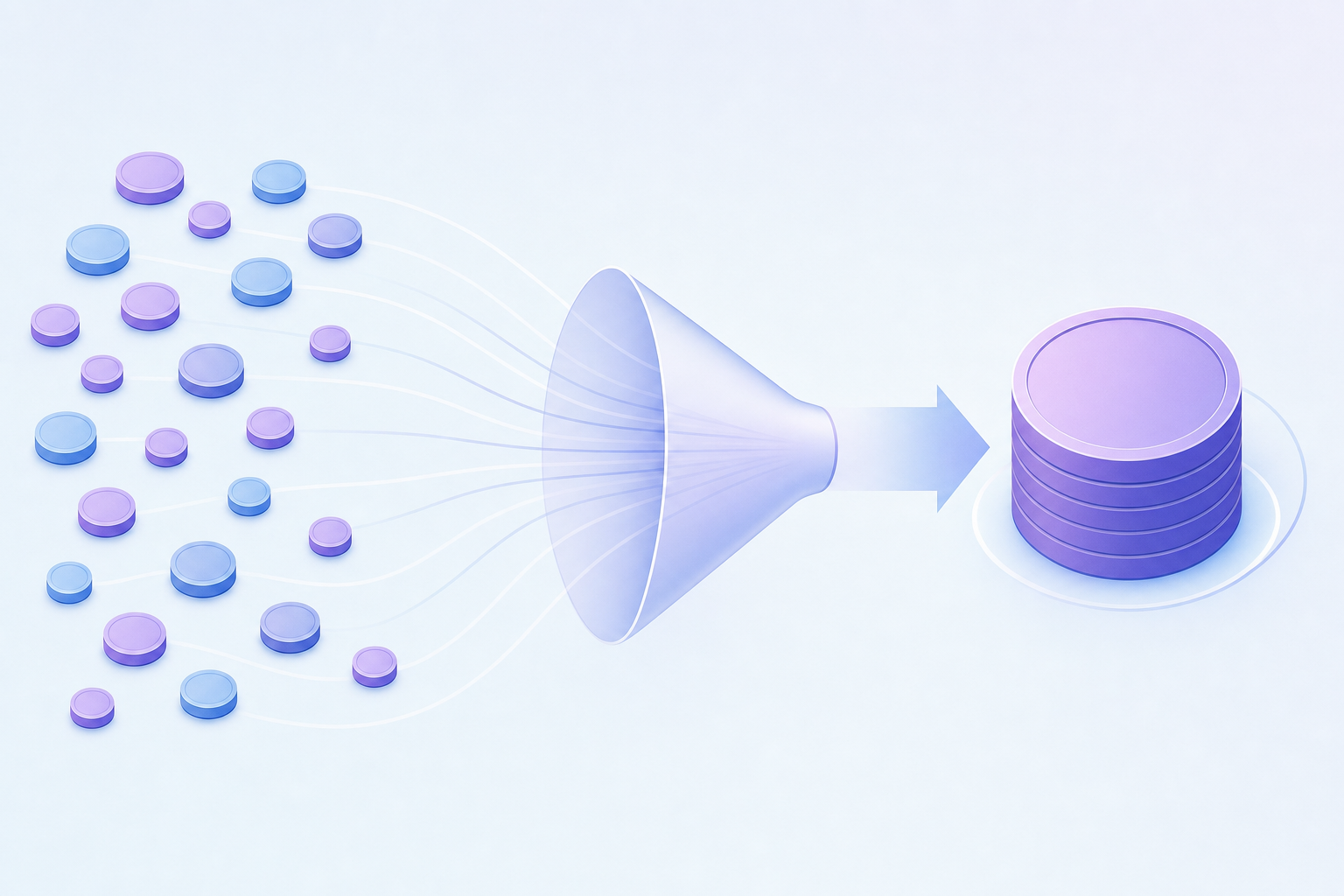
Payment aggregation solves this by holding creator balances until they reach a minimum threshold before disbursing. Instead of processing thousands of $1 transactions individually, services batch accumulated earnings into a single larger transfer that makes economic sense under traditional fee structures.
How Payment Aggregation Turns Pennies Into Payable Amounts
Publishers must clear a $100 mark before receiving a transfer. Balances roll forward month to month until the user reaches that target. This structure makes the micropayments creators expect financially viable. The threshold batches thousands of small earnings into one larger payment, turning a $0.30 fixed fee on $100 into just 0.3 percent overhead. Without aggregation, that same $0.30 charge consumes 30 percent of a $1 transaction. Creator services apply this same model, holding per-view earnings until the accumulated balance covers the cost of moving money.
The Four Micropayment Models and When Each One Works
Building financial infrastructure for per-view creator payouts means balancing transaction volume against processing fees. Just-in-time funding models can help manage this balance. You can route this capital through four distinct models.
Payment Model | Mechanism | Ideal Use Case | Strategic Trade-off |
|---|---|---|---|
Pay-as-you-go | Clears immediately per transaction. | One-off purchases requiring maximum flexibility. | High per-transaction fees erode margins on sub-dollar payouts. The $0.30 fixed charge turns a $1 payment into a $0.67 deposit. Processing thousands of per-view earnings individually makes this model financially unviable for creator services at scale. |
Aggregation with thresholds | Holds balances until they reach a minimum (typically $100), then disburses. | High-volume, low-value payouts like creator earnings or gig payments. | Delays compensation until threshold is met. Creators may wait weeks or months to receive small earnings, reducing liquidity and satisfaction. |
Real-time rails (RTP, FedNow) | Settles in under 30 seconds with no instant surcharge. | Time-sensitive payouts where speed matters more than cost optimization. | Limited to domestic transfers within supported networks. Cross-border payments still require alternative rails. |
Blockchain networks | Sub-cent transfers via fixed per-signature fees (e.g., Solana ~$0.00025). | Micropayments below fiat minimums, like per-view tips or sub-cent royalties. | Requires recipients to hold crypto wallets. Regulatory uncertainty and conversion friction limit mainstream adoption. |
Per-View Payout Economics Across Creator Services
Reviewing actual earnings reveals the math behind threshold requirements. Recent creator economy benchmarks show that services compensate users in fractions of a cent per engagement:
- TikTok Creator Rewards Program pays $0.40 to $1.00 per 1,000 qualified views.
- YouTube Shorts yields $0.01 to $0.06 per 1,000 views, making it one of the lowest-paying creator formats.
- A creator needs 100,000 views to clear $1 to $6 in earnings. At these rates, aggregation thresholds become necessary: processing individual payouts would leave creators with pennies after fees consume the principal.
Real-Time Payment Rails as an Alternative to Aggregation
Relying on payment aggregation delays compensation. Legacy infrastructure multiplies expenses. Real-time payment rails offer an alternative. Standard ACH transfers take one to five business days to clear. Moving funds across borders via SWIFT incurs $25 to $65 per transfer for the sender. You lose the ability to issue low-value payouts at scale when network fees exceed the principal amount.
Updated financial infrastructure eliminates these delays. RTP and FedNow settle in under 30 seconds with no instant surcharge, replacing one-to-five-day ACH windows. Cross-border rails like regional instant payment networks and stablecoin-based corridors can cut international transfer fees well below the $20 to $50 SWIFT charges per transaction, making low-value creator payouts more economically viable across jurisdictions.
Blockchain Solutions for Sub-Cent Payments
Fiat rails enforce hard payment floors. Blockchain networks bypass these restrictions. Solana uses a fixed per-signature fee, while Stellar relies on predictable pricing. These structures make sub-cent transfers viable.

The creator service DRiP proves this math works. Users send tips at one-tenth of a cent using Solana's blockchain infrastructure. Solana's base transaction fees run well under a cent per transfer, making sub-cent payments economically viable where fiat rails enforce hard minimums. DRiP routes millions of these micropayments monthly without hitting the fee floors that break traditional processor economics. When your service pays creators per view at TikTok's $0.0004 to $0.001 rate, blockchain networks let you disburse earnings as they accrue instead of holding balances until they clear aggregation thresholds.
Payout API Infrastructure for Creator Services at Scale
Creator services process thousands of transfers programmatically through API-driven payout infrastructure. Issuing low-value payouts at scale requires a system that routes funds automatically without manual review. Reviewing the best payout APIs helps identify the right fit. When your team reviews API options, technical capabilities separate functional systems from bottlenecks.
Core Requirements for Payout APIs
- Your system must reach payees globally using local payment methods.
- Implementation cycles matter when you process thousands of payouts weekly. Teams complete Dots integration in under a week, while multi-vendor stacks require three to six months coordinating KYC providers, compliance engines, and payout rails.
How Dots Powers Instant Creator Payouts Without the Fee Stack
We built Dots as global payments infrastructure for creator services. When multiple vendors process per-view creator payouts, your margins shrink. Unified influencer payment infrastructure fixes this. Unifying onboarding, compliance, tax, and recipient support under one API fixes this. Today, we route $3bn+ to over 1 million payees. You integrate in under a week.
Processing low-value payouts at scale requires exact mechanics. Dots batches accumulated earnings into optimized transfers, routes them through the lowest-cost rail for each jurisdiction, and settles funds in under 30 seconds using RTP or FedNow. The system verifies payee identity against KYC/KYB requirements before funds move, checks available budget at the transaction level, and generates 1099s automatically at year-end based on payment history. You avoid the fee stack that consumes margins on per-view creator payouts while maintaining full compliance across jurisdictions.
Final Thoughts on Creator Payment Infrastructure
You can't run a creator service on traditional payment processors when your users earn fractions of a cent per engagement. The fee stack consumes the payout before it reaches the recipient. Purpose-built infrastructure routes micropayments across blockchain and fiat rails at costs that preserve your margins. Dots processes $3bn+ for services paying creators at pennies per view.
FAQ
Can I build a per-view payout system without hitting processing fees that consume a third of each payment?
Yes. Aggregation models hold balances until they reach a minimum threshold (typically $100), then disburse through real-time rails like RTP or FedNow. This approach turns thousands of sub-dollar transactions into a single larger transfer, avoiding repeated $0.30 fixed charges that destroy margins on low-value payouts at scale.
Micropayments creators vs blockchain: when does each make sense?
Blockchain networks like Solana and Stellar work for sub-cent transactions where fiat rails enforce hard payment floors, as shown by DRiP's one-tenth-of-a-cent tips. Fiat aggregation works when you need compliant infrastructure, traditional bank settlement, and automated tax compliance for creators earning across jurisdictions.
What's the actual take-home on a $1 creator payout using standard processors?
$0.67. A 2.9 percent rate plus $0.30 fixed fee consumes nearly one-third of every $1 payment, leaving the creator with just 67 cents after processing.
How long does it take to integrate a payout API for creator services?
Most teams complete Dots integration in under a week. The system must route funds automatically without manual review, reach payees across different countries using local payment methods, and process thousands of transfers programmatically through API-driven infrastructure.
What real-time payment rails eliminate ACH delay without instant-payout surcharges?
RTP and FedNow settle in under 30 seconds with no instant surcharge, replacing one-to-five-day ACH windows. Dots routes $3bn+ through these rails to over 1 million payees, unifying onboarding, compliance, tax, and recipient support under one API.