How to Split a $100 Payout Three Ways With Payout APIs

Most engineers don't hit problems with revenue split payments at the math layer. They hit them at the edges: a retry fires twice, a chargeback lands after funds already cleared, a recipient crosses a tax threshold mid-quarter. Building a split payout architecture that handles all three payees correctly means designing for those edge cases from the start, not patching them after your first production dispute.
TLDR:
- The split payments market reaches $2.46 billion in 2026 at a 21.3% CAGR, making multi-party payout architecture a build priority.
- Calculate shares in the lowest currency unit and assign every residual cent to stop rounding errors before funds move.
- Attach idempotency keys to every payout request so network timeouts never trigger duplicate transfers to recipients.
- Gate each transfer with KYC and tax form collection before funds route; missing these checks exposes your service to regulatory fines.
- Dots routes $3bn+ to more than 1 million payees, with real-time budget checks and automated compliance gates built into the API.
Revenue-Split Models: Fixed, Percentage, and Tiered Structures
Before writing code for a multi-party payouts API, define the split payout architecture. Fixed-amount splits route a set dollar value to a recipient regardless of the total transaction size. Percentage-based splits divide the total transaction amount proportionally across payees. Tiered structures combine both: a fixed floor plus a percentage applied above a threshold.
Why Multi-Party Payouts Are Harder Than a Single Transfer
The collaboration split payments market will reach $2.46 billion in 2026 at a 21.3% CAGR. Dividing revenue split payments among multiple payees creates friction. Building a programmable payments architecture using a multi-party payouts API adds layers a single-recipient transfer never encounters: each payee needs separate identity verification, tax form collection, and rail selection. A chargeback on the original transaction can unwind funds already distributed across three or more accounts. Rounding errors that disappear in a one-to-one transfer compound across recipients, leaving your ledger off by dollars at scale. Every one of these failure points requires explicit logic before the first payout clears.
Anatomy of a Multi-Party Payout API Request
A structured marketplace payment API call packs distribution logic into a single payload. When you route revenue split payments, you pass every parameter at once to divide a $100 payout.
- Map each payee to a unique identifier and assign precise amounts: $60 to the primary creator and $30 to the co-host.
- Define your fee withhold directly so your service retains the correct margin before any funds route to recipients. On a $100 transaction with a 10% service fee, specify $10 as your withheld amount in the same payload. Dots deducts it at the transaction level, so your $90 remainder distributes proportionally without a separate reconciliation step.
Designing the Split Calculation Layer
Executing the math for revenue split payments demands absolute precision before funds move. Centralizing this logic prevents the errors common to fragmented microservices. When constructing a split payout architecture, structure your rules to protect capital by learning how to automate many-to-many payouts:
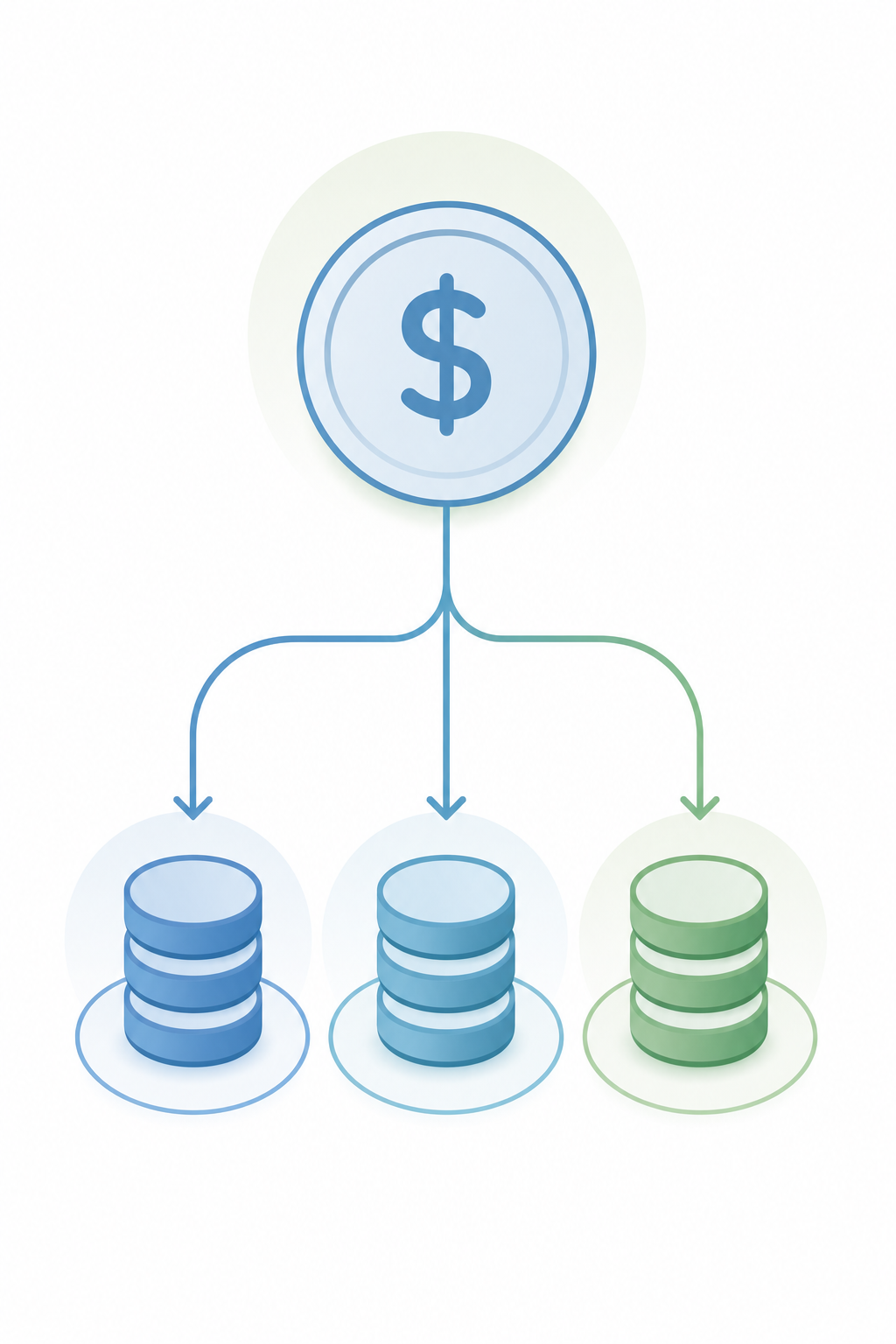
- Calculate shares in the lowest currency unit to stop floating point rounding errors. Compute residuals so every cent has an explicit destination.
- Set distribution mechanics using a strict hierarchy of global defaults, vendor-specific overrides, and transaction-level exceptions. A global default might assign 70% to the primary creator, 20% to a co-creator, and 10% to your service on every transaction. A vendor override lets a specific payee negotiate a custom rate, say 75%, without touching the global rule. A transaction-level exception handles one-off scenarios like a promotional payout or a disputed partial refund. Process each incoming transaction against this hierarchy in order so the most specific rule always wins.
Idempotency and Safe Retries in Split Payout APIs
Network timeouts create severe financial risk during revenue split payments. Unprotected retries send duplicate transfers.
Idempotency neutralizes this exposure. The client attaches a unique key to the request. If a timeout triggers a duplicate webhook, exactly one charge clears. See how API metadata prevents double payout errors.
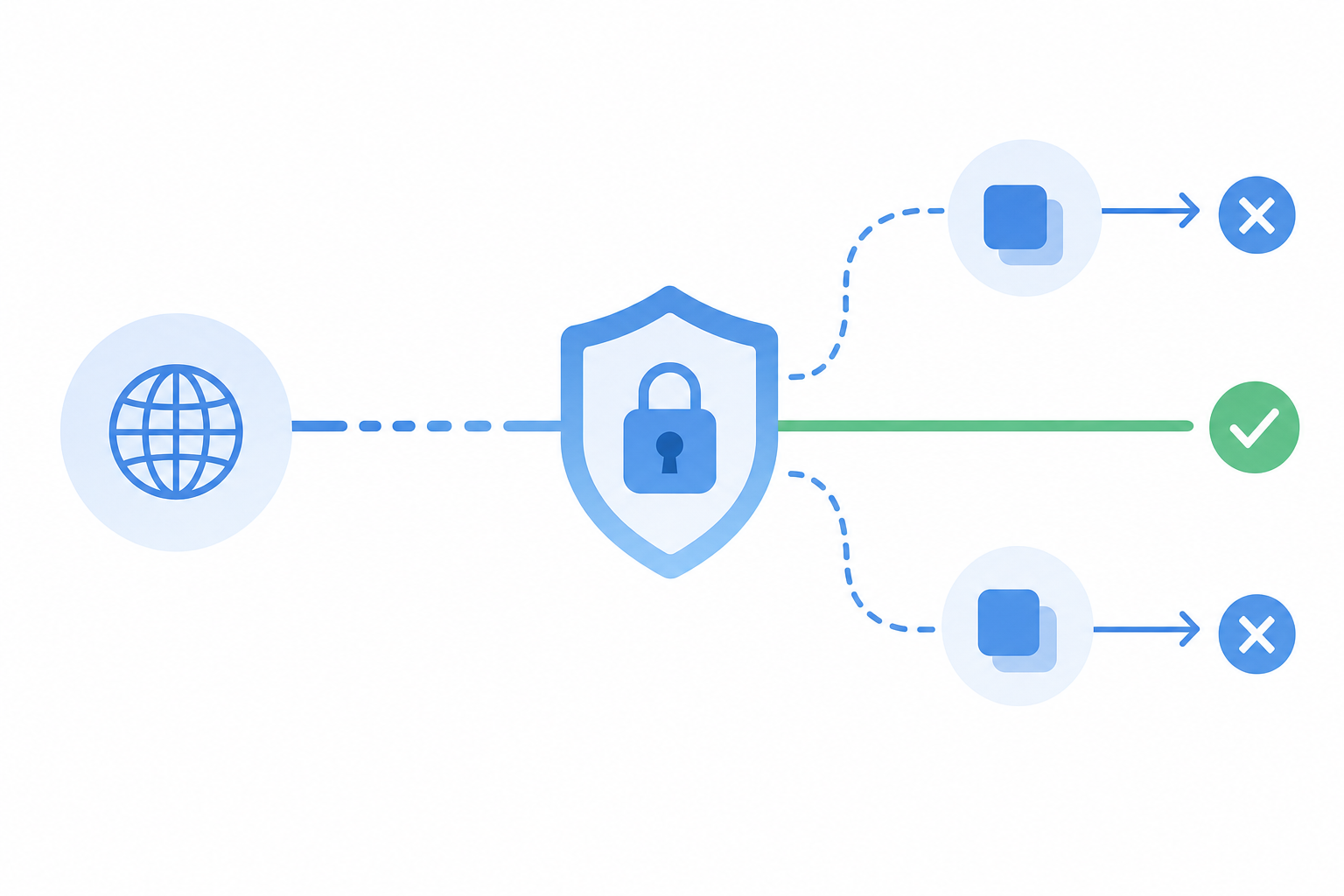
Structure your multi-party payouts API to manage retries safely:
- Store keys server-side alongside the original transaction status.
- On receiving a duplicate request with the same key, return the original response without reprocessing the payout.
- Log each key with a timestamp and expiry window so stale keys do not block legitimate resubmissions after a true failure.
Chargeback Propagation Across Multiple Recipients
A buyer disputes a transaction after your multi-party payouts API routes funds to three creators. Teams miss this risk until the first dispute forces expensive rework; similar dynamics arise when brand deal splits go wrong. Protect your split payout architecture by defining how chargebacks propagate using two recovery patterns:
- Recipient clawbacks: Pull funds directly from payee balances. This requires explicit legal agreements for debit authority. It protects capital but damages trust.
- Service absorption: your service covers the disputed amount from its own reserves instead of clawing back funds from payees. This approach preserves trust with your recipient base and avoids the legal complexity of debit agreements, but it transfers the full financial risk to your service. Reserve it for low-value disputes or situations where payee relationships outweigh short-term capital exposure.
- For high-value chargebacks, set a threshold above which automatic clawback terms activate, and document this threshold in your payee contracts before the first payout clears.
Pattern | How It Works | Capital Risk | Trust Impact | Legal Requirement | Best For |
|---|---|---|---|---|---|
Recipient clawback | Pull funds back from payee balances | Low: service recovers capital | High: damages payee relationships | Explicit debit authority in payee contracts | High-value disputes where capital exposure exceeds trust risk |
Service absorption | Service covers disputed amount from its own reserves | High: full risk sits with the service | Low: preserves payee trust | No debit agreement needed | Low-value disputes where payee relationships outweigh short-term capital exposure |
Compliance Obligations: KYC, Tax Forms, and Recipient Classification
Engineering teams must sequence compliance checks before moving funds. Missing these gates exposes your service to regulatory fines. Map your API to enforce exact rules:
- Gate the initial transfer with identity checks. Block withdrawal access until the KYC (Know Your Customer) or KYB verification payload returns an approval.
- Collect a W-9 for domestic recipients or a W-8BEN form for international payees before routing shared revenue. The W-9 triggers a 1099-NEC filing once cumulative payments to a U.S. payee cross $600 in a calendar year under IRC §6041. Miss it and your service faces penalties up to $310 per unfiled form under IRC §6722. For international payees, W-8BEN certification sets treaty-based withholding rates that can reduce the default 30% backup withholding applied to U.S.-sourced income. Block all payouts until both documents are on file; a missing form is not a paperwork gap, it is a taxable event waiting to be audited.
Rail Selection and Settlement Timing for Each Recipient
Match each payee to the rail that fits their location, speed requirement, and cost tolerance before the first transfer clears. ACH (Automated Clearing House) is the default for U.S. recipients: it settles in 1 to 3 business days and carries low per-transfer fees. RTP (Real-Time Payments) and FedNow settle under 30 seconds for domestic recipients who need instant access. International payees route through SWIFT (Society for Worldwide Interbank Financial Telecommunication) or local rails depending on the destination country; SWIFT fees run $25 to $65 per transfer for the sender. Storing each recipient's preferred rail in their profile lets your split payout architecture select the correct method automatically at payout time, eliminating manual routing decisions at scale.
Ledger Design and Reconciliation for Split Transactions
Data integrity shapes how you track revenue split payments. Your split payout architecture needs an immutable double entry ledger. Instead of overwriting payment rows upon status updates, append a correcting entry, a foundation for real-time reconciliation via API. This append-only logic supports payment system auditability to resolve disputes months after the original transaction clears. Each ledger entry should carry a timestamp, the payee identifier, the rail used, and the split rule version applied, so a compliance audit or chargeback inquiry surfaces the exact state of the system at the moment funds moved. Tag every entry with the idempotency key from the originating payout request to link ledger records back to API calls without a separate lookup. Without this structure, auditing a disputed split across three payees and two settlement rails becomes a manual forensic exercise that delays resolution and exposes your service to liability.
How Dots Handles Multi-Party Revenue-Split Payouts
We built the Dots multi-party payouts API to execute complex distribution math. We move $3bn+ to more than 1 million payees, proving our split payout architecture in production. Our infrastructure controls calculation, onboarding, and compliance under one contract:
- Real-time budget checks confirm available funds at the transaction level before moving capital.
- Automated compliance gates block revenue split payments, including 1099 and W-8BEN collection, until every required form is on file. Dots triggers 1099-NEC filing automatically once a U.S. payee crosses the $600 threshold, and routes W-8BEN certification for international recipients before the first transfer clears. Compliance obligations are enforced at the API layer, not delegated to a manual review queue.
Final Thoughts on Getting Multi-Party Revenue Split Payments Right
Every layer in this guide, from idempotency and chargeback propagation to ledger design and rail selection, exists because a single gap can freeze funds or trigger a compliance failure. Your split payout architecture needs all of these pieces working together, every one of them. Connect with the Dots team to see how these systems operate at scale.
FAQ
How do you split a $100 payout among multiple recipients using a multi-party payouts API?
Pass all distribution logic in a single API payload: assign each payee a unique identifier, specify their exact share in the lowest currency unit (cents, not dollars) to avoid floating-point errors, and define your service fee withheld before funds move. On a $100 transaction with a 10% service fee ($10), you might route $54 to a primary creator and $36 to a co-host in one call, with the $10 retained by your service automatically.
What's the safest way to handle retries in a split payout architecture without sending duplicate transfers?
Attach a unique idempotency key to every multi-party payout request so that if a network timeout triggers a duplicate webhook, exactly one charge clears. Store each key server-side alongside the original transaction status so your system can check whether a request already succeeded before processing again.
How does Dots handle chargeback propagation across multiple recipients in a revenue-split payment?
Dots supports two recovery patterns: recipient clawbacks (pulling funds directly from payee balances under explicit legal agreements) and service absorption (your service covers the disputed amount). The right choice depends on your legal agreements with payees and your tolerance for trust friction with your creator base.
What compliance checks are required before routing revenue split payments to international payees?
Collect a W-9 from domestic recipients and a W-8BEN from international payees before any funds move. For non-US payees, W-8BEN certification sets treaty-based withholding rates that can reduce the default 30% backup withholding applied to US-sourced income, and Dots automates this collection as part of payee onboarding.
Can I build a multi-party payouts API without managing KYC, tax forms, and ledger reconciliation separately?
Yes. Dots handles KYC and KYB verification, W-9 and W-8BEN collection, 1099 filing, and an immutable double-entry ledger under one contract, so you do not stitch together separate compliance tools. Real-time budget checks confirm available funds at the transaction level before capital moves, and all of this runs through the same API call that executes the split.