Best Automated AP for Multi-Currency Vendor Payments October 2026

Sending global payments without automation costs you time and margin on every transaction. Our view: if you pay vendors across borders, a payment API that routes funds over local rails beats an invoice tool bolted onto bank wires, because the rail you choose sets your speed, your fees, and your FX exposure. Vendor payment systems that support real multi-currency routing let you pay suppliers in their local currency, dodge conversion markups, and skip the regional banking mess. Currency swings, shifting compliance rules across jurisdictions, and the reconciliation work that follows each payment add even more drag. We ranked the solutions that actually deliver instant settlement across the rails your payees prefer.
TLDR:
- Automated AP systems cut manual data entry and speed multi-currency vendor payments
- We ranked solutions on rail coverage, settlement speed, transparency, and API quality
- Dots supports 190+ countries with 300+ payment rails for instant vendor payouts
- Routable, Tipalti, and Trolley offer invoice automation with limited rail options
- Dots delivers real-time settlement and white-label onboarding under one API
What Are Global Payout Solutions for Multi-Currency Vendor Payments?
Managing global vendor payments creates headaches. Manual data entry slows your team. An automated accounts payable (AP) system fixes this.
These tools digitize your workflow, handling invoice capture, approval routing, and final execution. You replace manual clicks with code. AP automation cuts processing times, freeing your finance team for strategic work.
Executing multi-currency payments correctly matters as you grow. Paying payees in local currency prevents hidden conversion fees, which add up fast because banks commonly add an FX (foreign exchange) markup of 1% to 3% above the mid-market rate. AP automation eliminates the need to manage multiple regional bank accounts to dodge those fees, so funds route locally instead.
Three challenges come up repeatedly with multi-currency payouts. Currency fluctuation risk grows when cross-border settlement takes 3 to 5 business days, because the rate you approved can move before funds land. Compliance rules differ by jurisdiction, with different tax forms, sanctions screening, and reporting requirements for every country you pay into. Reconciliation overhead rises with each currency, since finance teams match every payment to invoices and ledgers, adding to the hidden fees on payouts that cut into margin.
Automated AP tools mitigate each one. They quote foreign exchange rates at the moment of transfer, so you know what you owe before funds move. They also build localized tax and screening checks into the payout flow and sync multi-currency transaction data back to your primary ledger, which removes manual journal entries.
Regulation pushes the same direction. Mordor Intelligence reports that over 80 countries now require structured e-invoices that feed tax authorities directly, so plan for per-country data checks on every supplier payment. Our advice: pick a provider that runs those checks inside the payout flow instead of adding a separate compliance vendor.
How We Ranked Global Payout Solutions for Multi-Currency Vendor Payments
Choosing the right automated accounts payable system sets the pace for how fast payees receive funds and how much margin you keep, since a typical bank FX markup of 1% to 4% adds $200 to $800 to a $20,000 supplier payment. Demand keeps rising: Mordor Intelligence sizes the AP automation market at USD 6.94 billion in 2026 and projects USD 12.46 billion by 2031, a 12.44% CAGR (compound annual growth rate), per its AP market growth data. We reviewed the top multi-currency vendor payments options based on what powers your international payouts. We graded each provider on:
- Rail coverage: Number of payment methods and countries supported for executing vendor payments
- Settlement speed: How quickly funds reach payees, from batch processing to real-time delivery
- Transparency: Pricing clarity, FX rates, and fee visibility across transactions
- API quality: Developer experience, documentation depth, and integration speed
Best Overall Global Payout Solution for Multi-Currency Vendor Payments: Dots
Dots delivers global payout infrastructure through a developer-friendly API, with instant multi-currency settlement across 300+ payment rails. Built for services paying thousands of vendors monthly, Dots delivers real-time payouts without the FX markups or batch delays that slow traditional AP systems.
What they offer
- 300+ payment rails covering 190+ countries, including real-time networks (RTP (Real-Time Payments), FedNow (the Federal Reserve's instant payment service), UPI (India's real-time system), PIX (Brazil's real-time system)) and local methods (mobile money, digital wallets, bank transfers)
- Instant settlement by default with no surcharges for real-time delivery
- Transparent pricing with flat domestic fees and percentage-based international rates, eliminating hidden FX markups
- Developer-first API with complete onboarding, compliance, tax filing, and payout execution under one integration
- White-label payee portals where recipients choose their preferred payment method
- 24/7 support for both customers and payees to resolve payment issues fast
- Sub-week implementation timeline to go live with global payouts
- Best fit: services that need instant settlement at high volume, such as marketplaces or gig services paying 1,000+ vendors a month across 190+ countries, where a sub-week launch matters.
Routable
Routable is a B2B automated accounts payable tool processing vendor payments from invoice receipt to settlement across domestic networks. The trade-off is reach: it lacks real-time international rails and local payout methods outside the US, so cross-border vendors fall outside its fastest settlement options.
What they offer
- Invoice capture through email, batch upload, or API connections
- FedNow and RTP network access reaching 85% of US bank accounts
- Native NetSuite integration with two-way data syncing
- AI-driven fraud detection to flag anomalies
- Best fit: US-based companies already running NetSuite that pay mostly domestic vendors and need invoice approvals more than international rail coverage.
Pros:
- Native NetSuite integration with two-way data syncing keeps invoices and payments aligned in your ledger
- FedNow and RTP access reaching 85% of US bank accounts supports fast domestic settlement
- Invoice capture through email, batch upload, or API connections shortens approval cycles
- AI-driven fraud detection flags anomalies before funds leave
Cons:
- Country and rail coverage is limited, so teams paying vendors in many regions may need a second provider
- The product is built around domestic US networks, so local international rails are outside its core focus
- Custom pricing requires a sales conversation before you can model cost per vendor payment
Tipalti
Tipalti handles automated accounts payable through invoice processing, supplier management, and mass vendor payments. It features tax compliance tools for enterprise companies managing global suppliers.
What they offer
- Supplier self-service portals for onboarding, invoice submission, and payment method selection
- Execution across 50 rails in over 120 currencies with ACH, wire, and PayPal support
- Automated collection of W-9 (US tax identification) and W-8 (foreign status certification) forms with compliance validation
- Best fit: large enterprises with complex global tax compliance needs, such as finance teams collecting tax forms from hundreds of suppliers across 120+ currencies.
Pros:
- Automated tax form collection with compliance validation reduces manual tax paperwork for enterprise finance teams
- Supplier self-service portals let vendors onboard, submit invoices, and choose a payment method
- Execution across 50 rails in over 120 currencies covers most large supplier bases
Cons:
- Higher complexity and cost for smaller teams: implementation can take weeks to 90+ days, and lower monthly fees trade against per-payout charges of about $1 to $1.50 per ACH payment
- FX markups of 1.9% to 3.5% on top of the wholesale rate add cost on cross-border payments
- Settlement relies mainly on ACH and wires, which typically take 1 to 3 days domestically and 1 to 5 days cross-border
Trolley
Trolley is an automated accounts payable and tax tool supporting payments to 210 countries. The service uses bank transfers, wires, and PayPal, keeping compliance and tax management under one roof. The trade-off is speed: those rails settle in 1 to 5 days, and bank rails need a 4 to 6 week bank-partner onboarding step before they activate.
Core features
- Payout options across 135 currencies
- Recipient portals where payees select their preferred payment method
- Tax form collection with built-in withholding calculations
- API access for programmatic payout execution and recipient management
- Best fit: marketplaces and services that pay creators or freelancers across many countries and value recipient portals and 210-country reach over instant settlement.
Pros:
- Payments to 210 countries in 135 currencies give broad geographic reach
- Recipient portals let payees select a preferred payment method
- Tax form collection with built-in withholding calculations sits alongside payouts
Cons:
- Fewer real-time settlement options than Dots: payouts run mainly over bank transfers, wires, PayPal, and Venmo, which settle in 1 to 5 days
- Activating bank rails requires a 4 to 6 week bank-partner onboarding step
- The $49 monthly plan adds per-payout fees, such as a $10 wire payment fee, plus an FX markup of about 2%
Feature Comparison Table of Global Payout Solutions for Multi-Currency Vendor Payments
Comparing top AP automation choices helps you identify the best solution for your multi-currency vendor payments. We built this matrix so you can quickly see how Dots ranks against Routable, Tipalti, and Trolley across core features, including how Dots compares to Trolley.
Feature | Dots | Routable | Tipalti | Trolley |
|---|---|---|---|---|
Countries Supported | 190+ | Limited | 200+ | 210+ |
Payment Rails | 300+ | Limited | 50+ | Limited |
Starting Price | From $999/month, plus flat domestic and percentage-based international fees | Custom pricing (quote required) | Custom pricing, plus per-payout fees and FX markup | From $49/month, plus per-payout fees |
Best For / Ideal Company Size | Services paying 1,000+ vendors monthly across borders | US-based companies on NetSuite paying mostly domestic vendors | Large enterprises with complex global supplier and tax needs | Marketplaces and services paying creators or freelancers in many countries |
Why Dots Is the Best Global Payout Solution for Multi-Currency Vendor Payments
We built Dots to process multi-currency payments without the usual delays. Waiting days for bank clearance hurts your bottom line.
For companies paying thousands of payees monthly across borders, Dots combines speed, transparency, and global reach in a single API.
Here is how we improve your workflow:

- You access over 300 payout rails for instant settlement. Your payees pick exactly how they want to receive funds through white-label portals.
- Real-time networks like RTP, FedNow, UPI, and PIX deliver payments in seconds without surcharges.
- Transparent pricing eliminates hidden FX markups that eat into your margins.
- Developer-first API design speeds up payment integration, so you can connect onboarding, compliance, tax filing, and automated payouts in under a week.
- 24/7 support for both you and your payees keeps payments moving without delays.
How Multi-Currency Vendor Payments Work
A multi-currency payout follows a clear sequence. Your team approves the invoice, the system quotes the foreign exchange rate at the moment of transfer, funds route over the local rail in the payee's country, and the transaction syncs back to your ledger for reconciliation.
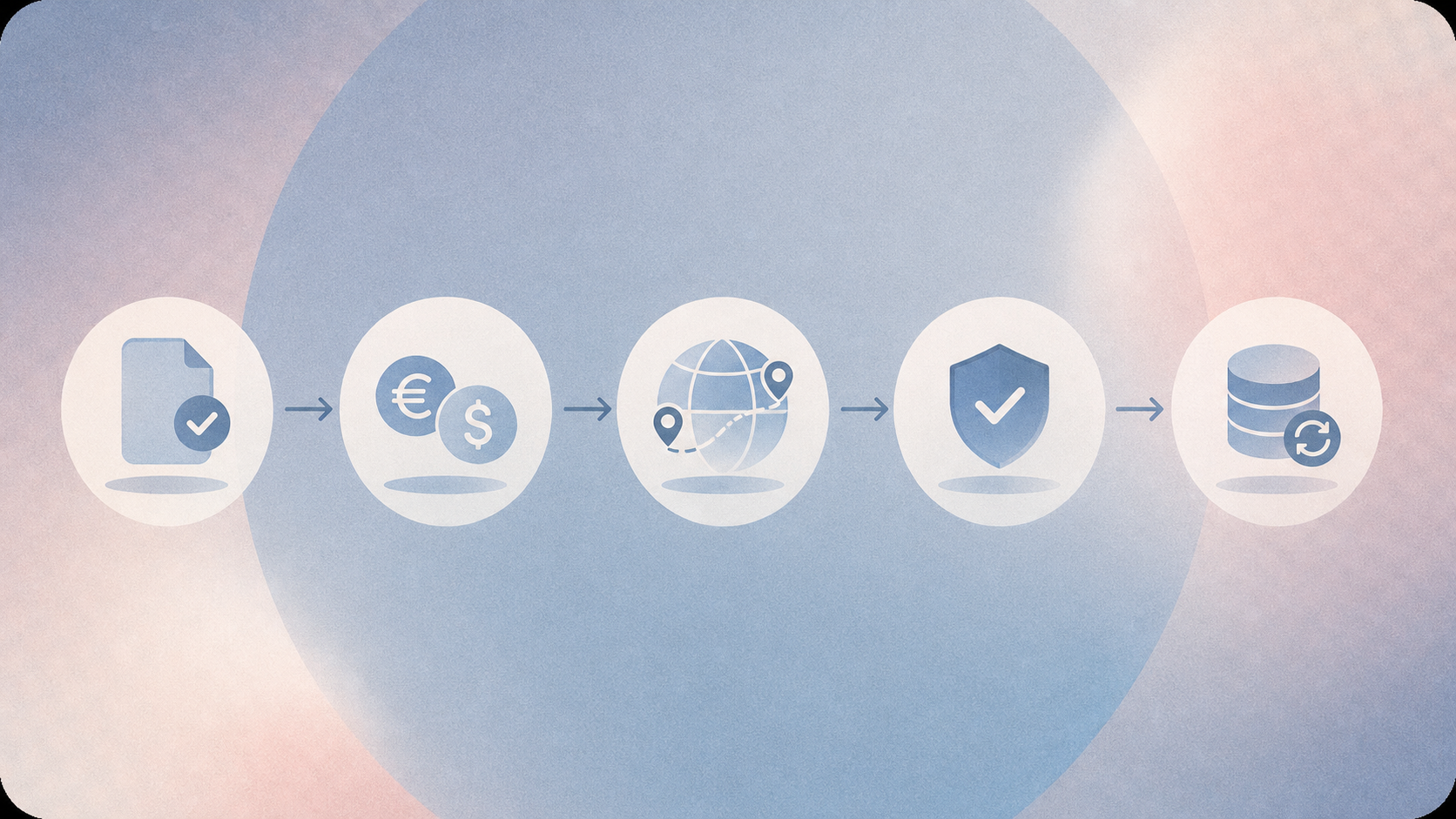
Paying in local currency keeps you clear of the 1% to 3% bank FX markup described above, since funds settle directly in the payee's currency instead of passing through a correspondent bank. Real time payments over rails such as RTP, FedNow, UPI, and PIX also matter here: they clear in seconds, while wire transfers tied to cross-border settlement can take 3 to 5 business days, leaving more room for the rate to move before funds land. Pair them with real time reconciliation, where each payout posts to your ledger as it settles, so you stop matching payments to invoices by hand at month-end.
- Invoice approval triggers the payout request before any funds move
- FX rate quote locks in the cost at the moment of transfer, not after
- Local rail routing sends funds through the payment method common in the payee's country
- Per-country compliance, including tax form collection and sanctions screening, runs before settlement completes
Final Thoughts on Choosing Your Global Payout Partner
Speeding up multi-currency payments starts with matching your workflow to the right rails and coverage. Each tool in this guide handles a different mix of countries, compliance checks, and payout speeds. Your best fit depends on how many vendors you pay each month and whether you need instant settlement or can wait a few business days.
Use three questions to decide. First, how many vendors do you pay each month? Second, how many countries do you pay into? Third, how fast must funds land? If you pay mostly US vendors and run NetSuite, Routable fits. If you collect tax forms from hundreds of suppliers across 120+ currencies, Tipalti fits. If you pay creators or freelancers in up to 210 countries, Trolley fits.
If you pay 1,000+ vendors a month across 190+ countries and need instant settlement over 300+ rails, Dots fits. As a global payments API, it launches in under a week. Compare more options in our guide to global payout APIs, then schedule a demo to see Dots in action.
FAQs
How do I choose the best automated accounts payable solution for multi-currency payments?
Start by counting your monthly vendor volume and the countries you pay into. If you're moving thousands of payments across 50+ countries, focus on rail depth and real-time settlement over invoice-scanning features built for domestic AP teams.
Which AP automation tool works best for companies just starting international payouts?
Tools like Dots and Trolley let you go live quickly with minimal compliance onboarding. If you're already locked into NetSuite and only paying US vendors, Routable's native integration can speed deployment.
Can automated accounts payable systems handle both instant payouts and batch processing?
Yes, but check each provider's rail support. Dots offers real-time networks like RTP, FedNow, UPI, and PIX without surcharges, while Stripe charges 1.5% for Instant Payouts in the US, Australia, and New Zealand.
What's the difference between AP automation for domestic vendors versus multi-currency payees?
Domestic tools focus on invoice workflows and ACH execution. Multi-currency platforms add FX conversion, local payment rails, tax withholding across jurisdictions, and compliance screening for cross-border transactions.
When should I switch from my current AP solution to a multi-currency system?
If you're manually converting currencies in spreadsheets, waiting 3+ days for cross-border wires to clear, or paying more than 2% in FX markup per transaction, a purpose-built multi-currency system can cut FX costs and settle payouts faster over local and real-time rails.
How much does a multi-currency vendor payment solution cost?
Pricing varies by provider. Dots starts from $999/month plus flat domestic and percentage-based international fees. Trolley starts from $49/month plus per-payout fees, such as a $10 wire fee, plus an FX markup of about 2%. Tipalti and Routable use custom pricing, with Tipalti adding per-payout fees and an FX markup on top.
How long does it take to implement a multi-currency payout system?
Dots goes live in under a week. Tipalti implementation can take weeks to 90+ days. Trolley's bank rails need a 4 to 6 week bank-partner onboarding step before they activate.