Mobile Money Payouts for African Creators
Paying creators in East Africa sounds simple until you realize that African creator payments can't just follow the same SWIFT or ACH path you use everywhere else. Most of your creators there aren't unbanked by accident; mobile money is the financial system they actually use. M-PESA creator payouts are how earnings reach those users, and this post breaks down the mechanics, the limits, and what a real multi-rail strategy looks like for paying across the continent.
TLDR:
- African creators without bank accounts rely on M-PESA as their only link to global earnings.
- Safaricom's Daraja B2C API pushes funds directly to a recipient's phone with no PIN required from the payee.
- The B2C endpoint caps single transactions at KES 250,000, so your payout logic must account for this limit.
- SWIFT fees of $25 to $65 per transfer wipe out small creator balances when routing cross-border payments.
- Dots routes M-PESA creator payouts through 300+ local rails across 190+ countries under one API contract.
The African Creator Economy and the Mobile Money Imperative
The creator economy across Africa grows rapidly, driven by high smartphone adoption and a young demographic. Analysts project a billion-dollar African creator economy in the coming years.
Global services hit a structural hurdle when processing African creator payments. Traditional banking infrastructure misses these users. They rely on digital wallets instead: mobile money accounts tied to a SIM card, not a branch. In Kenya alone, M-PESA processed 28.33 billion transactions in FY2024 (Safaricom), making it more accessible than any bank for the majority of the population. Routing creator earnings through mobile money rails is not a workaround; it is the only path that actually reaches these users.
What M-PESA Is and How It Became Africa's Financial Infrastructure
Safaricom and Vodafone launched M-PESA in 2007. It grew from a basic text remittance tool in Kenya into Africa's leading mobile money network. The service operates across Kenya, Tanzania, Mozambique, Lesotho, and the Democratic Republic of Congo.
How the M-PESA B2C API Works for Creator Disbursements
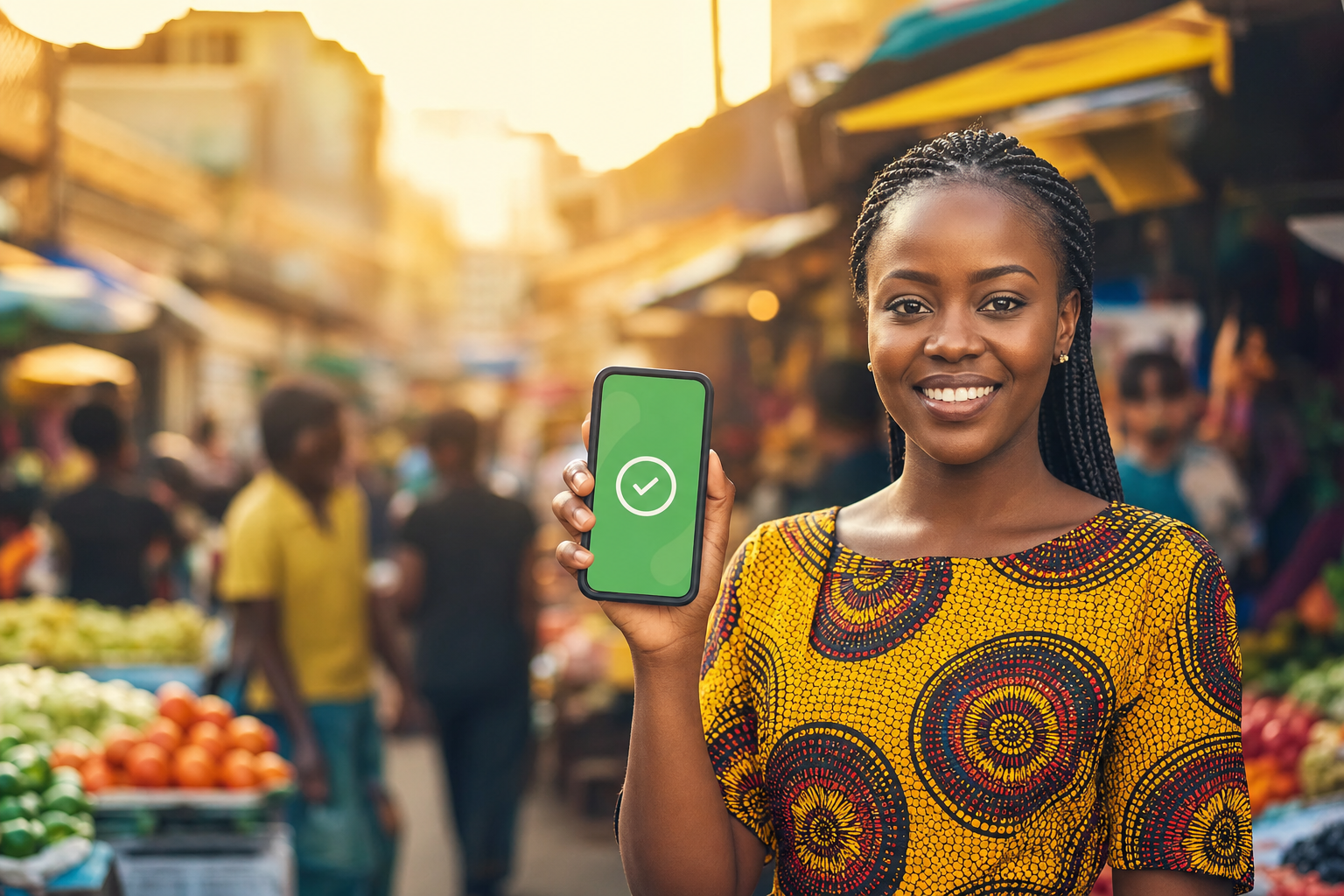
Issuing m-pesa creator payouts requires routing earnings directly to a user's phone. Safaricom provides the Daraja API for this exact workflow. You use the B2C endpoint to move funds from a corporate shortcode to individual mobile numbers.
Unlike standard collections where an STK push prompts a customer for a PIN, the B2C endpoint pushes funds outward instantly. The recipient takes no action to receive the funds: they get an SMS confirmation once the transfer settles to their M-PESA wallet. Your system initiates the call with the recipient's phone number, the amount in KES, and a remarks field for transaction tagging. Safaricom's Daraja API returns a transaction ID you can use to match disbursements against your payout records.
M-PESA Payout Limits and Fee Structure for Creator Services
The Central Bank of Kenya raised mobile money thresholds in 2020. Today, the B2C endpoint caps single transactions at KES 250,000. You must design payout logic around these current mobile transaction limits.
Safaricom applies distinct pricing tiers for B2C disbursements based on transaction size. Transfers up to KES 100 cost nothing; mid-range transfers between KES 101 and KES 1,500 carry a flat fee of KES 11; and larger transfers scale up to KES 105 for amounts approaching the KES 250,000 ceiling. For a creator cashing out KES 5,000 weekly, that fee stays under KES 52, a fraction of the $25 to $65 SWIFT sender fees that cross-border wire transfers impose on the same amount.
Transaction Amount (KES) | M-PESA B2C Fee (KES) | Equivalent SWIFT Sender Fee (USD) |
|---|---|---|
Up to 100 | 0 | $25 to $65 per transfer (flat) |
101 to 1,500 | 11 | |
1,501 to 250,000 | Up to 105 |
The Creator Monetization Gap M-PESA Payouts Help Close
Missing a traditional bank account blocks African talent from global reward funds. A creator might build a massive worldwide audience but remain unable to cash out through standard wire transfers. Blocked from international earnings, these individuals rely on informal local audiences, direct tips, and regional sponsorships.
For mobile money creators, native digital wallets act as the sole financial link keeping their businesses alive. The alternative is remaining unbanked.
KYC and Compliance Requirements for M-PESA-Based Creator Payouts
The Central Bank of Kenya oversees mobile money through the National Payment System. Disbursing m-pesa creator payouts at scale requires your service to manage specific compliance layers before funds move:
- Safaricom requires individuals to present a physical government-issued ID to open a wallet. For services issuing african creator payments, this provides a built-in KYC (Know Your Customer) layer at the wallet level: each M-PESA number is already tied to a verified identity. That said, service-level compliance still requires you to collect payee information independently before funds move. For non-US creators receiving US-sourced income, this includes W-8BEN certification, which sets treaty-based withholding rates and must be completed before the first payout clears.
Cross-Border Payout Challenges When Paying African Creators
Global creator services typically hold funds in US or European accounts. Routing these earnings to East African digital wallets through standard banking networks creates heavy friction for african creator payments.
SWIFT sender fees cost $25 to $65 per transfer. These costs wipe out small balances for mobile money creators cashing out weekly. Multiple foreign exchange conversion layers also erode the final payout before it reaches a creator's mobile wallet: a USD-denominated transfer moving through a correspondent bank, converted to KES at an inflated mid-market spread, can lose an additional 2 to 4% before Safaricom ever receives the funds. For a creator cashing out $200, that means $4 to $8 disappears in conversion alone, on top of the SWIFT sender fee. Routing through local rails that settle directly in KES cuts both the fee and the conversion loss.

M-PESA Within a Multi-Rail African Payout Strategy
M-PESA dominates East Africa, but a broader strategy requires multiple rails for african creator payments. Issuing m-pesa creator payouts works well in Kenya, but Safaricom limits reach in West and North Africa. Single-rail routing locks out massive user bases.
Building a Complete Coverage Stack
To grow your service geographically, integrate East African wallets into a wider payout system that layers mobile money, bank transfers, and local wallet networks by region. M-PESA handles Kenya and a handful of neighboring markets, but West Africa runs on different rails entirely: MTN Mobile Money and Airtel Money cover Nigeria, Ghana, and Côte d'Ivoire, while North Africa leans on local bank transfers and digital wallets tied to national ID systems. A complete coverage stack means routing each payment through the rail that actually reaches that recipient's account type, not defaulting every payout to SWIFT and absorbing the $25 to $65 sender fee when a local alternative exists. Building these connections one API at a time is expensive: each mobile money operator runs its own sandbox, certification process, and compliance requirements, adding weeks of engineering per market before you clear your first live transaction. The practical path is a unified payout API: one integration that maps each recipient's country and preferred method to the right local rail automatically, so your payout logic stays constant while the underlying routing adapts. Dots covers 300+ local rails across 190+ countries under a single contract, meaning you can extend from Kenya to Nigeria to Egypt without rebuilding your disbursement infrastructure each time you enter a new market.
How Dots Connects Global Creator Services to M-PESA and Beyond
Building a Daraja connection to pay creators through white-labeled wallets drains engineering time, and manual cross-border onboarding stalls geographic expansion.
We move $3bn+ to 1 million payees across 190+ countries under one API contract. (Dots)
Dots removes the per-rail overhead required for african creator payments. We route m-pesa creator payouts through 300+ local rails across 190+ countries under a single API contract: no separate Daraja certification, no per-operator sandbox, no duplicate compliance builds. KYC onboarding and tax-form collection are handled at the service level before the first payout clears, so your team ships to a new African market without rebuilding disbursement infrastructure each time. The result: a creator in Nairobi receives funds to their M-PESA wallet in the same payout batch as a creator in Lagos or Cairo, routed through the right local rail for each recipient automatically.
Final Thoughts on African Creator Payments and Mobile Money Rails
For creators who rely on mobile wallets as their only financial link, getting paid shouldn't depend on whether they hold a bank account in the right country. M-PESA solves a real piece of that problem in East Africa, but a full coverage strategy means stacking multiple rails on top of it. You can see how Dots handles that routing, including M-PESA, by getting in touch here.
FAQ
What's the fastest way to pay African creators without using SWIFT wire transfers?
Mobile money rails like M-PESA route funds directly to a creator's phone number in seconds, cutting out the $25 to $65 per-transfer SWIFT sender fees that erode small payouts. A payout API with pre-built mobile money connections, such as Dots, removes the engineering overhead of building Daraja integrations per country and routes each payment through the lowest-cost local rail available for that recipient's location.
Can I build a multi-country African creator payout system without integrating each mobile money network separately?
Yes. A unified payout API covers multiple African rails under one integration, so you avoid building separate connections to M-PESA, regional West African wallets, and North African networks one by one. Dots routes m-pesa creator payouts and other local mobile money rails across 190+ countries through a single API contract, including KYC onboarding and tax-form collection for each recipient.
How do M-PESA transaction limits affect creator payout logic?
The B2C endpoint caps single transactions at KES 250,000, so any payout batch exceeding that threshold must be split across multiple transactions per recipient. Your payout logic needs to account for this ceiling at the disbursement level and the batch level to avoid failed transfers.
What KYC requirements apply to M-PESA-based creator payouts?
Safaricom requires a government-issued ID to open an M-PESA wallet, which provides a built-in identity layer for african creator payments at the wallet level. At the service level, you still need to collect and verify payee information before funds move, including W-8BEN certification for non-US creators receiving US-sourced income, which sets treaty-based withholding rates and must be completed before the first payout clears.
Should I use M-PESA alone or build a broader mobile money stack for African creator payments?
M-PESA alone covers Kenya and a handful of East African markets, but leaves West and North Africa unreachable. If your service pays mobile money creators across multiple African regions, you need additional rails alongside M-PESA, otherwise a single-rail routing decision locks out large creator populations before they ever reach your payout flow.