Membership Service Payouts: Cadence, FX Fees, and Failed Charges October 2026

TLDR:
- Membership services lock your earnings behind minimum thresholds ($3 to $100) and batched payout schedules that delay access to your funds by days or weeks.
- Expired cards and insufficient balances cause 20% to 40% of subscription churn. Dunning management automates 3 to 4 retry attempts across 7 to 14 days to recover failed payments before accounts downgrade.
- Multi-hop SWIFT (Society for Worldwide Interbank Financial Telecommunication) transfers eat 3% to 5% of international payouts through FX markups and intermediary bank fees.
- Smart retry logic checks decline codes after each failure and spaces attempts to avoid fraud alerts while giving subscribers time to update payment details.
- Dots routes payouts via SWIFT, ACH, and 300+ local rails with real-time settlement and transparent FX rates.
Subscription creator payments land in your bank account on someone else's timeline. You might be earning daily, but if your membership service batches payouts monthly and holds funds until you cross a minimum threshold, your recurring creator earnings sit frozen until the service decides to release them.
Add international subscribers into the mix and you're also paying foreign exchange fees that vary wildly depending on which rails your service uses. Then there's the silent killer: failed charges from expired cards, insufficient balances, and fraud flags that quietly erode your membership service payouts every billing cycle unless your service runs automated retry logic to recover them before the subscription cancels.
Payout speed, FX (foreign exchange) transparency, and retry logic function as retention levers for a membership service, not back-office chores. Creators who wait weeks for funds move to services that pay faster, and the creator economy could reach $480 billion by 2027, per Goldman Sachs Research. Fix your cadence, FX, and failed-charge recovery before you scale.
How Payout Timing Works for Subscription Creators
Predictable cash flow remains a constant hurdle for independent builders. When you depend on recurring creator earnings, knowing the exact moment funds reach your bank account shapes how you plan expenses. Payout timing depends entirely on the specific membership service you select.
Because these services operate on varied schedules, you cannot assume a standard deposit date. Patreon batches transfers on a strict monthly basis. By contrast, Ko-fi allows instant withdrawals once you cross their threshold. Substack processes payments within days of a subscriber billing date. Gumroad offers weekly or monthly payout cycles depending on your account settings. Each service attaches its own wait times between the moment a subscriber pays and when you can move those funds into your operating account.
Minimum Payout Thresholds Across Creator Services
Earning money from subscribers holds little value if you cannot access your funds. Many creator services lock your cash behind a mandatory earnings benchmark. This barrier controls the exact moment you can initiate a bank transfer.
Different services set drastically varied withdrawal bars. This discrepancy causes friction for newer builders trying to gain momentum. On X subscriptions, transfers operate on a monthly schedule with a minimum payout threshold near $50. Ko-fi requires creators to reach $3 before initiating a PayPal withdrawal. Patreon holds funds until you cross $10 for direct deposit or $20 for PayPal. YouTube memberships lock payouts until your account accumulates $100 across all revenue streams. Each benchmark delays access to recurring creator earnings, forcing you to wait weeks or months before converting subscription revenue into working capital.
Service | Payout Schedule | Minimum Threshold |
|---|---|---|
Patreon | Batches transfers on a strict monthly basis | $10 for direct deposit or $20 for PayPal |
Ko-fi | Allows instant withdrawals once threshold is met | $3 for PayPal withdrawal |
Substack | Processes payments within days of subscriber billing date | Varies by account |
Gumroad | Weekly or monthly cycles depending on account settings | Varies by account |
X Subscriptions | Monthly schedule | $50 |
YouTube Memberships | Monthly schedule | $100 across all revenue streams |
Do not copy a $100 bar like YouTube Memberships just because a larger service uses it. If most of your creators earn under $100 a month, set the minimum threshold at or near $10 and pay weekly so funds don't sit idle. Dots supports payment cadence configuration by payee tier or region (daily batch, weekly, or real-time) and enforces configurable payout schedules and minimum withdrawal thresholds through payouts automation.
Foreign Exchange Fees and Currency Conversion for International Creators
Building a global audience brings hidden currency conversion costs. Most membership services pass foreign exchange fees directly to creators whenever a subscriber pays in a different currency. Multi-hop SWIFT transfers carry 3 to 5% in combined FX markups and intermediary bank fees. These charges slice directly into your membership service payouts before funds reach your account.
The mechanic works like this: a subscriber in Germany pays in euros, the membership service converts to USD at a marked-up rate, then routes the funds through one or two correspondent banks before they reach your account. Each intermediary bank clips its own fee, a lifting fee of roughly $15 to $50, according to Corpay's wire transfer fee breakdown, on top of the FX spread. A creator earning $500 from European subscribers in a single month can absorb $15 to $25 in conversion costs before the payment ever lands. At scale, those deductions compound into a meaningful share of your monthly recurring revenue.
Route payouts over local rails wherever the creator's country supports them, since local rails skip the correspondent-bank hops that generate per-wire fees. Pair this with a global payments API that selects the lowest-cost rail per country so FX spreads stay visible before you send.
Why Subscription Payments Fail
Losing recurring creator earnings hurts. Payment barriers sometimes block renewals. You need to pinpoint the root cause to clear these disruptions.
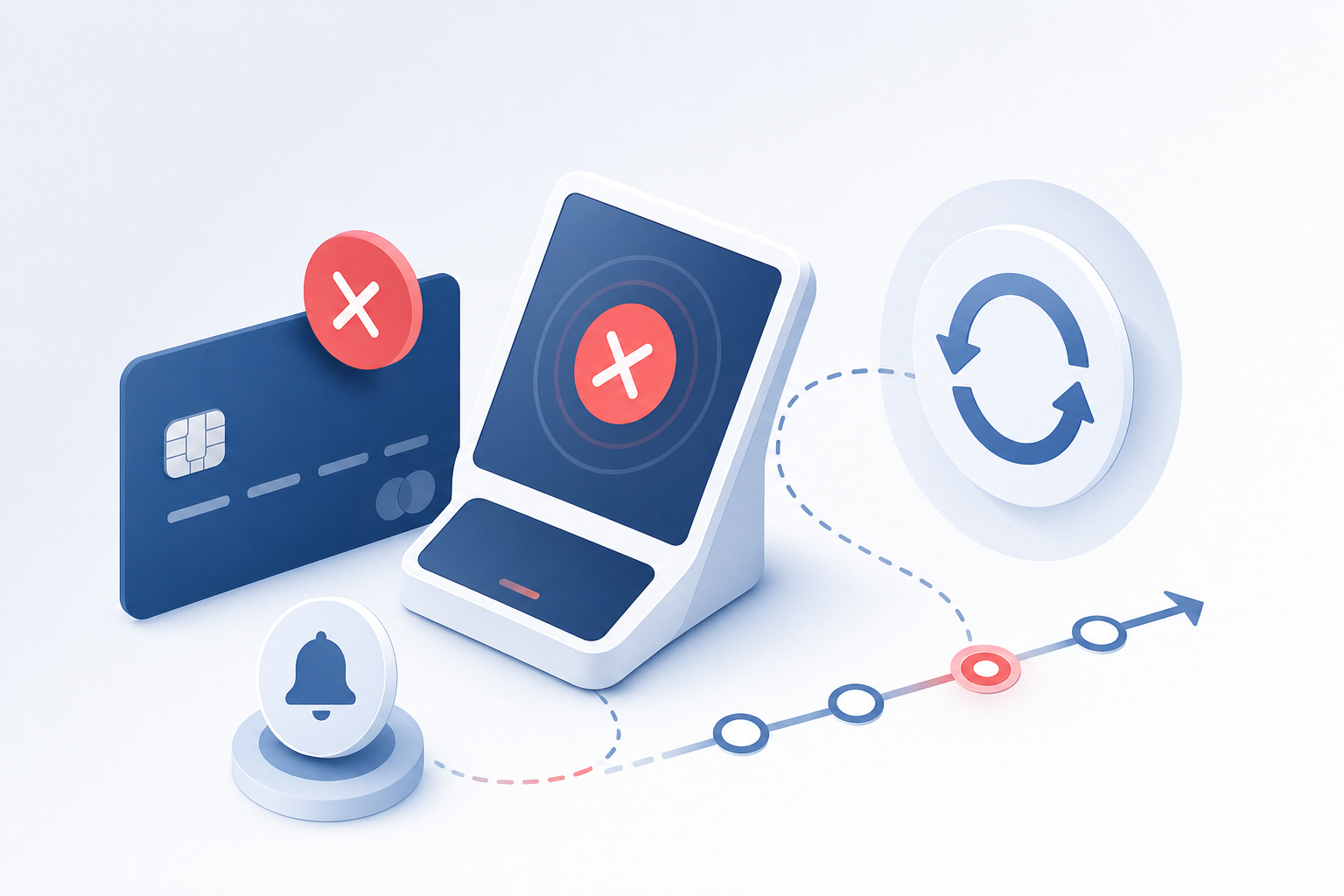
Subscription creator payments typically drop due to four issues:
- Customers receiving replacement cards in the mail often forget to update their payment details. This remains the most frequent cause of failure. Banks mail new cards months before expiration, but subscribers rarely update stored credentials across every recurring service. When the old card expires mid-billing cycle, the charge fails instantly. Your membership service loses revenue from an otherwise engaged subscriber who intended to stay subscribed.
- Insufficient account balances cause a second wave of failures, particularly at month-end when subscribers carry lower balances before their next paycheck clears. The charge posts, the bank rejects it, and your service records a failed payment for a subscriber who may have had enough funds just 48 hours later.
- Fraud detection flags block charges when a card issuer sees an unusual pattern, such as a subscription renewal from a new device or a country the cardholder has not previously used. The bank declines the charge as a precaution, even though the subscriber authorized the recurring billing when they signed up. These declines require the subscriber to contact their bank or update payment details before the next retry can succeed.
- Hard declines occur when the card is permanently unusable: closed accounts, reported-stolen cards, or cards flagged for fraud. Unlike soft declines from insufficient funds, no retry will recover a hard decline. Your service needs to route these to an immediate payment-update prompt and stop wasting retry cycles on a card that will never clear.
Dunning Management and Automated Payment Recovery
Expired credit cards cut directly into subscription creator payments. Involuntary failures cause 20% to 40% of churn across membership services. Dunning management automates the recovery of these failed charges before a system triggers total cancellation.
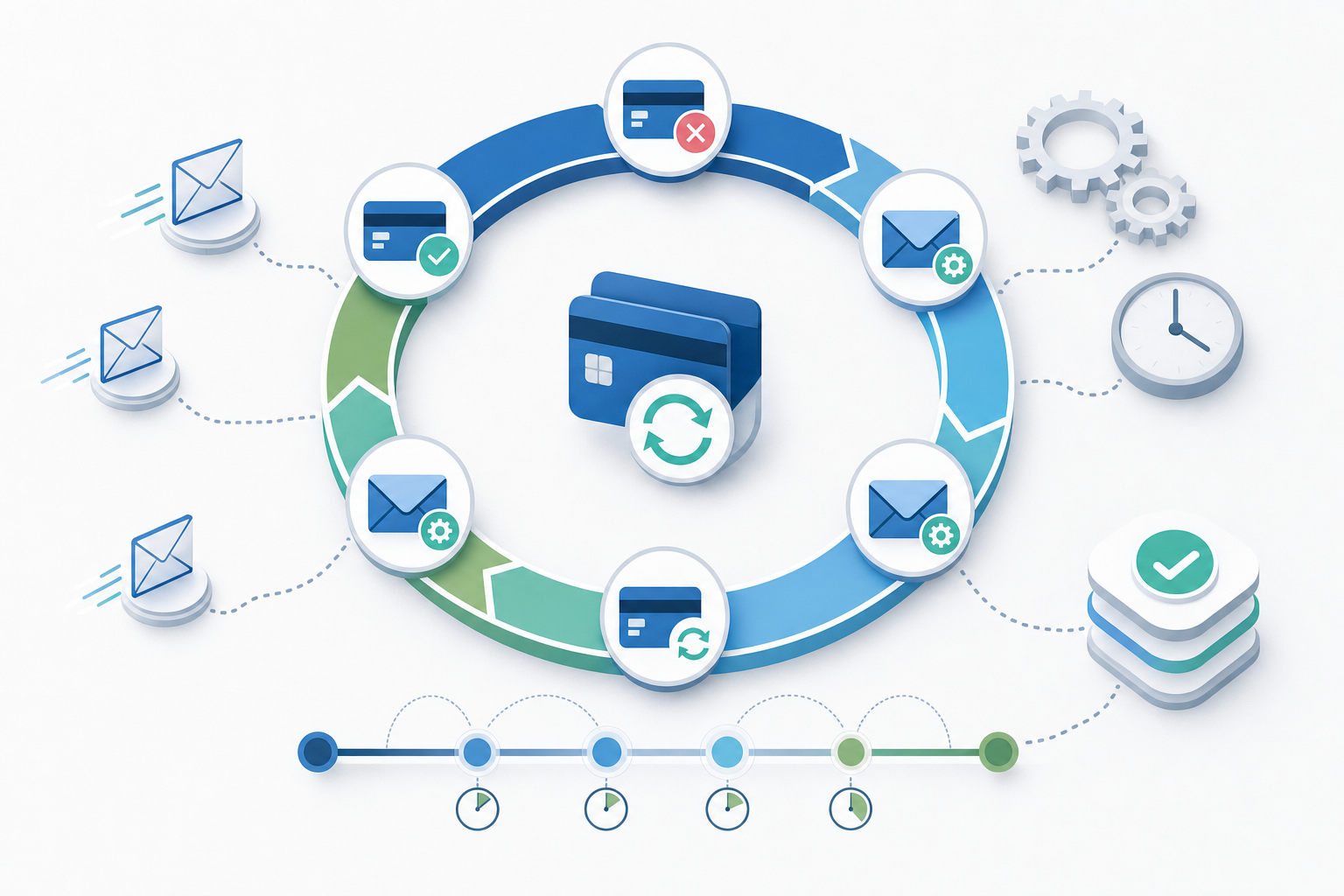
A standard workflow includes:
- An immediate email notification sent the moment a charge fails, giving the subscriber a direct link to update their payment details before any retry occurs.
- A first retry 3 to 5 days after the initial failure, timed to give cardholders a chance to act on the notification or receive a replacement card.
- A second retry at day 7 to 10, paired with a follow-up email that signals the account will downgrade if the charge does not clear.
- A final retry near day 14, after which the system downgrades the account and stops charging if no valid payment method is on file.
Smart Retry Logic for Failed Charges
Hitting a subscriber with repeated identical charge attempts triggers fraud monitors. You need a scheduled approach to recover recurring creator earnings without annoying your audience.
Merchants typically schedule three to four retries spread across 7 to 14 days. Each attempt waits longer than the last to avoid triggering fraud alerts while giving the subscriber time to update expired card details. Smart retry logic checks the decline code after each failure and adjusts timing based on whether the issue was insufficient funds, an expired card, or a hard decline that won't resolve with time.
Here is how that plays out: a $15 monthly membership fails on the 1st with an insufficient-funds code, so the service retries on the 4th, again on the 8th after a typical payday, and makes a final attempt on the 14th before any downgrade. An expired-card or hard-decline code skips this retry sequence entirely and routes the subscriber straight to a payment-update prompt. This split keeps retry cycles focused on charges that have a real chance of clearing.
What Happens When All Recovery Attempts Fail
The automated recovery cycle eventually ends. Membership services retry failed transactions and notify members throughout the billing window. Once the system exhausts every attempt, the processor stops pinging the card.
Losing recurring creator earnings triggers an automatic account downgrade. On Patreon, users whose charges fail for approximately 30 days lose access to patron-only content and membership perks. The system stops attempting to charge the card and moves the account back to free-tier status. Creators see immediate revenue loss, while subscribers who intended to stay subscribed disappear from your paying member count. Your service needs dunning automation to recover these charges before the 30-day window closes and the downgrade becomes permanent.
How the Dots Creator Payouts API Works for Membership Services
The Dots payouts API routes funds via SWIFT, ACH (Automated Clearing House), and 300+ local rails across 190+ countries. You gain real-time settlement without instant-payout surcharges.
Most services launch Dots in under a week. Fast integration removes the slow timelines, hidden FX markups, and volume restrictions that restrict typical membership service payouts.
Final Thoughts on Membership Service Payouts and Payment Infrastructure
Most subscription creator payments fail because of expired cards, not canceled memberships. Dunning automation and scheduled retries recover a meaningful slice of that revenue before the system downgrades an account. Payout timing and FX transparency become deal-breakers once your service crosses borders. If you need faster settlement and lower conversion costs for your creators, schedule a call with us and we will show you how Dots routes funds without hidden fees or volume caps.
FAQ
How can I automate payouts to creators on my membership service?
Dots handles payout automation through a single API that routes funds via SWIFT, ACH, and 300+ local rails. You integrate once and gain access to real-time settlement without building custom payout logic for each payment method.
What's the difference between instant payouts and standard settlement times?
Standard ACH transfers settle in 1 to 2 business days, while instant rails deliver funds in under 30 seconds. High-value payments make sense for instant rail fees, but batch payouts work well for routine creator earnings where speed matters less than cost.
How do subscription services recover failed payments before canceling members?
Services schedule three to four retry attempts spread across 7 to 14 days, pairing each retry with automated email notifications. Smart retry logic checks the decline code after each failure and adjusts timing to avoid triggering fraud alerts.
When should I worry about foreign exchange fees for creator payouts?
The moment you enroll your first international creator. Multi-hop SWIFT transfers carry 3 to 5% in combined FX markups and intermediary bank fees, which slice directly into membership service payouts before funds reach creator accounts.
What happens when all dunning recovery attempts fail?
Membership services automatically downgrade the account once the automated recovery cycle exhausts every retry attempt. The processor stops pinging the card, and the creator loses access to subscriber-tier benefits and recurring earnings.