Where Payouts Belong in a Creator Agency Tech Stack

Building out your influencer marketing agency tools usually follows a predictable order. You solve for finding creators, then managing them, then proving ROI to clients. Payout infrastructure gets bolted on at the end, or not at all. But how you pay creators affects whether they work with you again, and whether your agency stays compliant as your global roster grows. This is a breakdown of how agency payout software fits into a full creator agency tech stack, and why it deserves more than an afterthought.
TLDR:
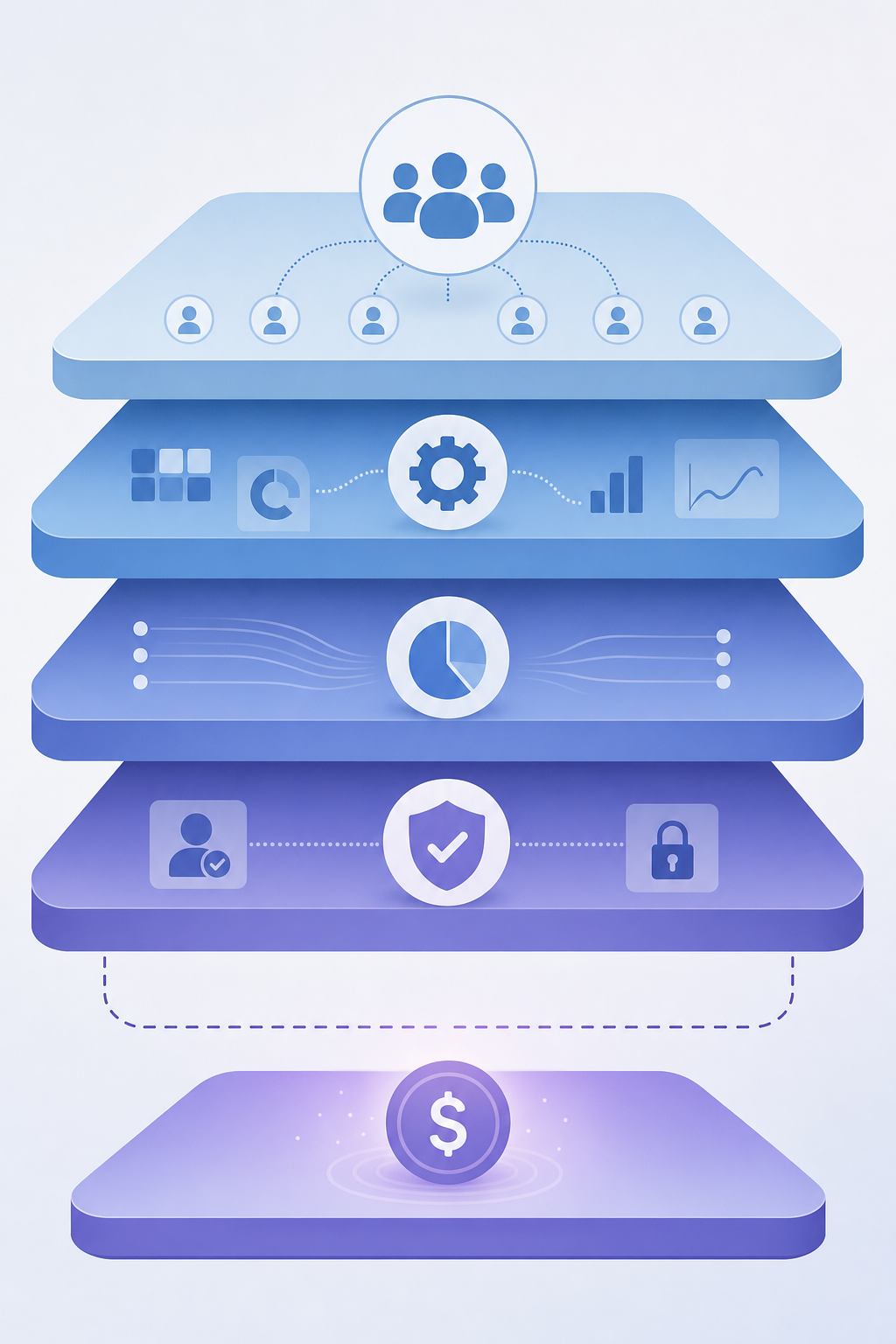
- A complete creator agency tech stack covers 5 layers: discovery, management, attribution, compliance, and payouts.
- 40% of influencers deprioritize agencies that pay late, making payout infrastructure a retention issue.
- Generic payment processors skip identity verification and tax collection, leaving compliance risk with your agency.
- Purpose-built agency payout software syncs settlement status back to your campaign and finance tools via API.
- Dots routes $3bn+ to more than 1 million payees and integrates in under a week.
The Core Layers of an Influencer Marketing Agency Tech Stack
As the influencer marketing sector expands, scaling partnerships requires a unified creator agency tech stack. Fragmented systems create immediate bottlenecks.
Executing campaigns requires specialized influencer marketing agency tools across five functional layers:
- Discovery: Vetting talent based on demographics and engagement.
- Management: Coordinating campaign briefs, content approvals, and creator communications across your client base.
- Attribution: Connecting creator content to measurable client outcomes through UTM tracking, affiliate codes, and pixel-based reporting.
- Compliance: Collecting tax forms, verifying payee identity, and screening against global watchlists before funds move.
- Payouts: Disbursing creator compensation accurately, on time, and across jurisdictions. This is the layer most agency stacks treat as an afterthought.
Creator Discovery and Vetting Tools
Vetting talent at scale requires dedicated software. Influencer marketing tools replace manual scrolling with filtered database searches. They run audience quality scoring to flag fake followers and brand safety checks to catch past controversies. The right discovery approach depends entirely on your channel mix and campaign type. You will generally select from three tool categories:
- Metadata tools run basic searches against standard profile metrics like location, engagement rate, and follower counts. Use these for fast, top-of-funnel filtering when your channel criteria are straightforward.
- Audience analytics platforms go deeper: they map follower demographics, identify audience overlap across creators, and score content quality beyond raw engagement. Use these when your client needs verified reach into a specific consumer segment, beyond raw follower volume.
- Social listening tools surface creators who are already talking about your client's category without a paid relationship. These uncover authentic advocates whose existing content signals genuine fit, and they typically convert into better-performing partnerships than cold outreach.
Campaign and Relationship Management Tools
After finding the right creators, work moves to the management middle layer. This software handles campaign briefs, content approvals, and daily communications. Running campaigns across multiple accounts requires strict relationship tracking to prevent duplicate outreach across your client base.
Choosing the correct setup depends on your exact organizational structure:
- Purpose-built creator CRMs record audience overlap, past campaign performance, and historical content rights instead of only tracking basic deadlines like generic project management tools.
- Agency systems segment approvals and metrics per brand while keeping a global view of every creator partnership, so data stays strictly organized without losing macro visibility.
Performance Tracking and Attribution Tools
Proving return on investment supports your creator agency tech stack. Clients demand hard numbers over vanity metrics. Without connecting performance tracking software with broader systems, you cannot answer which partnerships actually drive pipeline.
To tie creator content directly to client sales, agencies rely on specialized attribution methods:
- UTM tracking tags every post link to isolate specific traffic sources.
- Affiliate syncing maps unique promo codes back to individual creators for accurate commission and performance reporting. When a sale converts, your agency can trace it back to the exact post, creator, and code that drove it, without relying on cookie-based click tracking that breaks when browsers block third-party data. Pairing affiliate data with UTM reports and pixel events gives clients a full-funnel view of which partnerships are actually moving product.
Why Payouts Are the Missing Layer in Most Agency Stacks
Agencies typically build their creator agency tech stack from the top down. Campaign sourcing takes priority over payment execution. Without dedicated agency payout software, final settlement devolves into manual spreadsheets and slow bank transfers weeks after work wraps.
Delayed compensation ruins relationships fast. If talent waits months for a check, they reject your next brief. Survey data shows 40% of influencers deprioritize late-paying agencies, meaning slow settlement is a talent retention problem, and a finance one too. Creators talk. A reputation for slow payments follows your agency into every future campaign brief. Closing the gap between content delivery and disbursement is one of the highest-impact improvements an agency can make to its roster quality.
What Separates a Purpose-Built Payout Tool from a Generic Payment Processor
Generic payment processors act as basic pipes. They execute transactions but assume your agency already gathered mandatory documents, checked recipients against global watchlists, and formatted routing details. This leaves you managing the riskiest parts of the disbursement process manually.
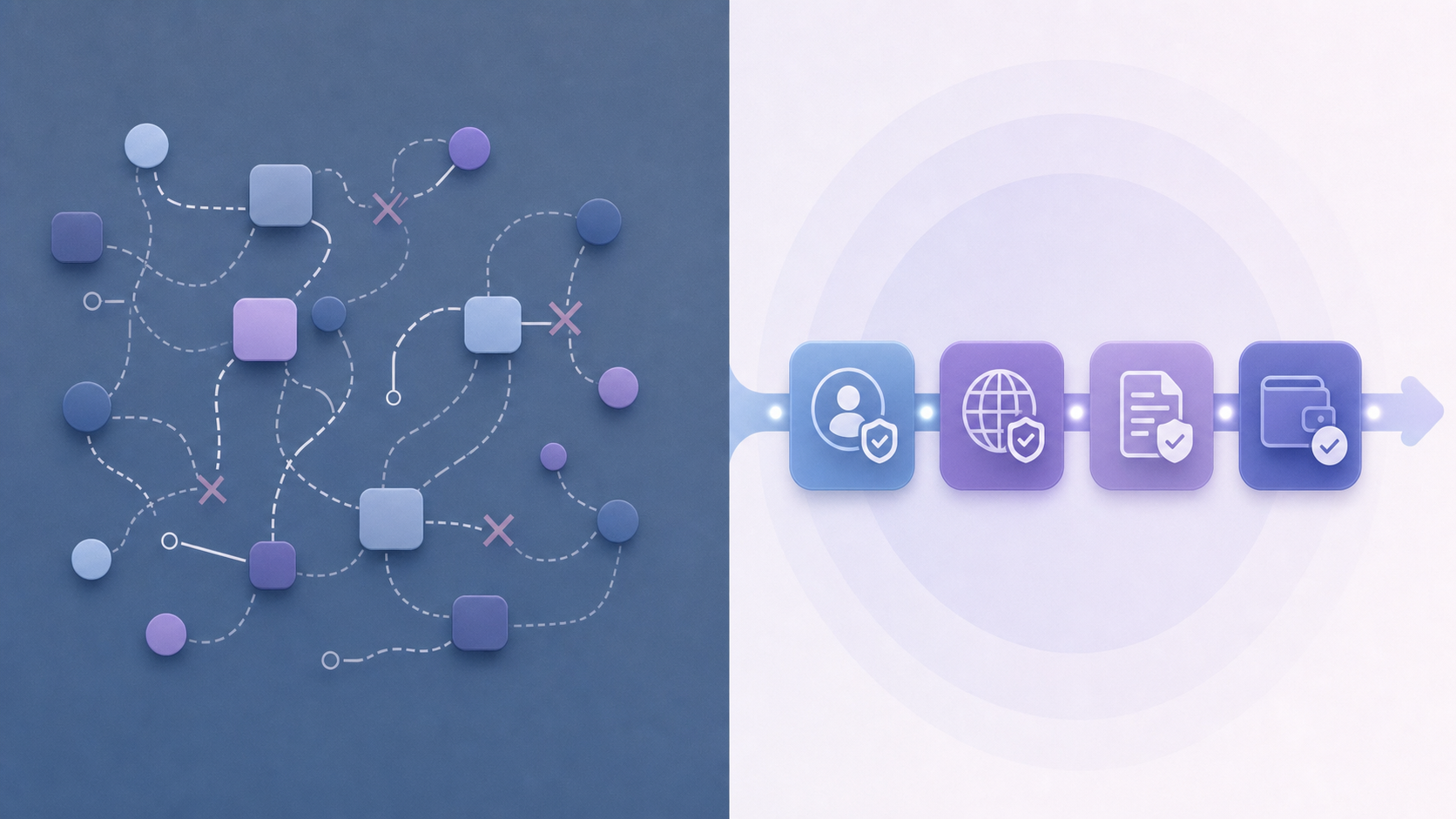
Selecting proper creator agency payout software requires checking for features that push beyond simple money movement:
Capability | Generic Payment Processor | Purpose-Built Agency Payout Software |
|---|---|---|
Payee identity verification (KYC: Know Your Customer) | Not included; agency manages manually | Built into creator onboarding flow |
Global watchlist screening | Not included; agency manages manually | Automated before funds move |
Tax form collection (W-9, W-8BEN) | Not included; chased down at year-end | Gated at onboarding, automated |
1099-NEC filing | Not included; agency liable for penalties | Filed automatically at year-end |
Campaign reconciliation | Manual spreadsheet updates | API sync marks deliverables compensated |
Accounting system sync | Manual double-entry | Real-time webhook events per disbursement |
Integration timeline | Varies; compliance setup adds weeks | Live in under a week |
- Payee onboarding requires built-in identity verification. Standard processors skip validation entirely: they assume your agency already collected government IDs, ran KYC checks, and screened payees against global watchlists before funds move. Purpose-built payout software embeds that verification step into the creator onboarding flow, so compliance gates run automatically before the first disbursement instead of sitting as a manual checklist your team manages separately.
Tax and Compliance Requirements for Paying Creators at Scale
Moving high volume compensation requires adhering to strict rules:
Moving high volume compensation requires adhering to strict rules:
- US reporting requires collecting a W-9 and running Taxpayer Identification Number (TIN) matching before moving funds. Once cumulative payments to a US creator cross $600 in a calendar year, IRC §6041 requires a 1099-NEC filing. Miss it and the payer faces penalties up to $310 per unfiled form under IRC §6722, with liability sitting with your agency, not the creator. Non-US creators require a W-8BEN before their first payout, certifying foreign status and setting the applicable withholding rate. Purpose-built payout software automates both collection flows, so the right form is gated at onboarding instead of chased down at year-end.
How Payout Infrastructure Connects to the Rest of the Agency Stack
Financial data must sync across your creator agency tech stack. Isolated tools force manual updates. Proper integration guarantees settlement statuses reflect across your influencer marketing agency tools.
Assess how agency payout software fits into operations by checking these API data flows:
- Campaign reconciliation: Payment clearing updates your project interface, marking deliverables compensated.
- Finance synchronization: Vendor records flow into accounting systems to stop manual double-entry. Every disbursement syncs as a line item in your general ledger the moment it clears, with no reconciliation spreadsheets and no end-of-month catch-up. Dots exposes webhook events for identity verification, tax-form submission, and payout method confirmation, so your finance team sees accurate, real-time payment status without polling a separate tool.
How Dots Handles Payout Infrastructure for Creator Agencies
Dots serves as the final financial layer in your creator agency tech stack.
We route $3bn+ to more than 1 million payees through a single API.
Generic payment processors leave you managing compliance risk manually. Our agency payout software executes the entire disbursement lifecycle under one contract. You can integrate and go live in under a week. We replace manual spreadsheets with programmatic disbursements, batching creator payments, filing tax forms, and syncing settlement status back to your campaign tools automatically. Every payout triggers webhook events your finance stack can consume in real time, so reconciliation happens at the moment funds clear instead of at month-end. The result: your team stops chasing payment confirmations and starts focusing on the next campaign.
Final Thoughts on the Full Creator Agency Tech Stack
A strong creator agency tech stack doesn't stop at performance tracking. Creators remember how fast you pay them, and that reputation follows you into every future campaign. Closing the gap between content delivery and payment settlement is where agencies tend to see the clearest gains.
Book a demo to see how Dots handles the full payout lifecycle, from creator onboarding to tax filing, under one contract.
FAQ
What should a creator agency tech stack include for payouts that generic payment processors miss?
A purpose-built agency payout software layer handles payee identity verification, global watchlist screening, and tax-form collection. These are steps generic processors skip entirely. Without these built in, your agency manages the riskiest parts of the disbursement process manually, which breaks down fast at scale.
Can I pay international creators through Dots without managing separate tax forms for each country?
Yes. Dots collects W-8BEN forms from non-US creators before their first payout, automates TIN matching and 1099 filing for US-based talent, and handles India-specific requirements including TDS calculation under Section 194J and PAN card collection, all within a single onboarding flow. This removes the need to track overlapping tax jurisdictions across multiple tools.
How do influencer marketing agency tools for payouts connect to campaign management and accounting systems?
Agency payout software connects to the rest of your influencer marketing agency tools through API data flows: payment clearing updates your project interface to mark deliverables compensated, and vendor records sync into accounting systems to stop manual double-entry. Dots exposes webhook events for identity verification, tax-form submission, and payout method confirmation, so settlement statuses stay current across your stack without polling.
Dots vs. Stripe Connect for creator agency payouts?
Stripe Connect charges a 1.5% surcharge for instant payouts and caps fast transfers at $10 million per day, which creates fee erosion and volume limits for agencies paying creators at scale. Dots bundles real-time rails (RTP, FedNow, Venmo, CashApp, and 300+ local rails across 190+ countries) at no instant surcharge and with no daily cap, and goes live in under a week.
What is TIN matching and why does it matter for agencies paying creators at scale?
TIN (Taxpayer Identification Number) matching validates a creator's tax ID against IRS records before funds move, catching mismatches that trigger backup withholding or filing penalties. Once cumulative payments to a US creator cross $600 in a calendar year, IRC §6041 requires a 1099-NEC filing. Miss it and the payer faces penalties up to $310 per unfiled form under IRC §6722, with liability sitting with the agency, not the creator.