How to Design a Creator Payout SLA

Most services land on a payout cadence design without fully thinking through what it takes to back it up. A weekly schedule sounds manageable until your risk team needs more time, or your creators start comparing you to a competitor that pays daily. Getting your creator payout SLA right means matching your payment frequency to what your infrastructure, compliance requirements, and creator base can actually support. That's worth thinking through carefully.
TLDR:
- A creator payout SLA commits to exact disbursement timing and recourse, unlike standard payment agreements.
- Your cadence choice (daily batch, fixed weekly, or real-time) directly shapes creator retention and fraud exposure.
- Faster creator payment frequency shrinks your KYC and W-9 compliance window, creating legal risk you own.
- Cross-border SWIFT transfers take multiple business days and carry $25 to $65 in sender fees per transfer.
- Dots routes $3bn+ to over 1 million payees, with webhooks and tax screening built into the flow.
What a Creator Payout SLA Is (and Why It Differs from Standard Payment SLAs)
A creator payout SLA acts as a binding commitment detailing exactly when payees access their earnings. This agreement defines specific payment rails and outlines clear recourse if a disbursement misses the target window.
Standard payment agreements track backend metrics like system uptime and transaction authorization rates. A creator payout SLA operates differently by adding rigid specificity around creator payment frequency and settlement speed. Because these disbursements represent personal income instead of B2B invoices, a missed window carries real financial consequences for the payee: delayed rent, missed supplier payments, or cash flow gaps. That stakes difference is why a creator payout SLA must define when funds move and what happens when they don't: which party is liable, what documentation a creator needs to file a claim, and how quickly your service resolves the shortfall.
The Three Core Payout Cadence Models
Choosing a payout cadence design determines how funds exit your ledger. You have three primary architectures to structure your creator payout SLA.
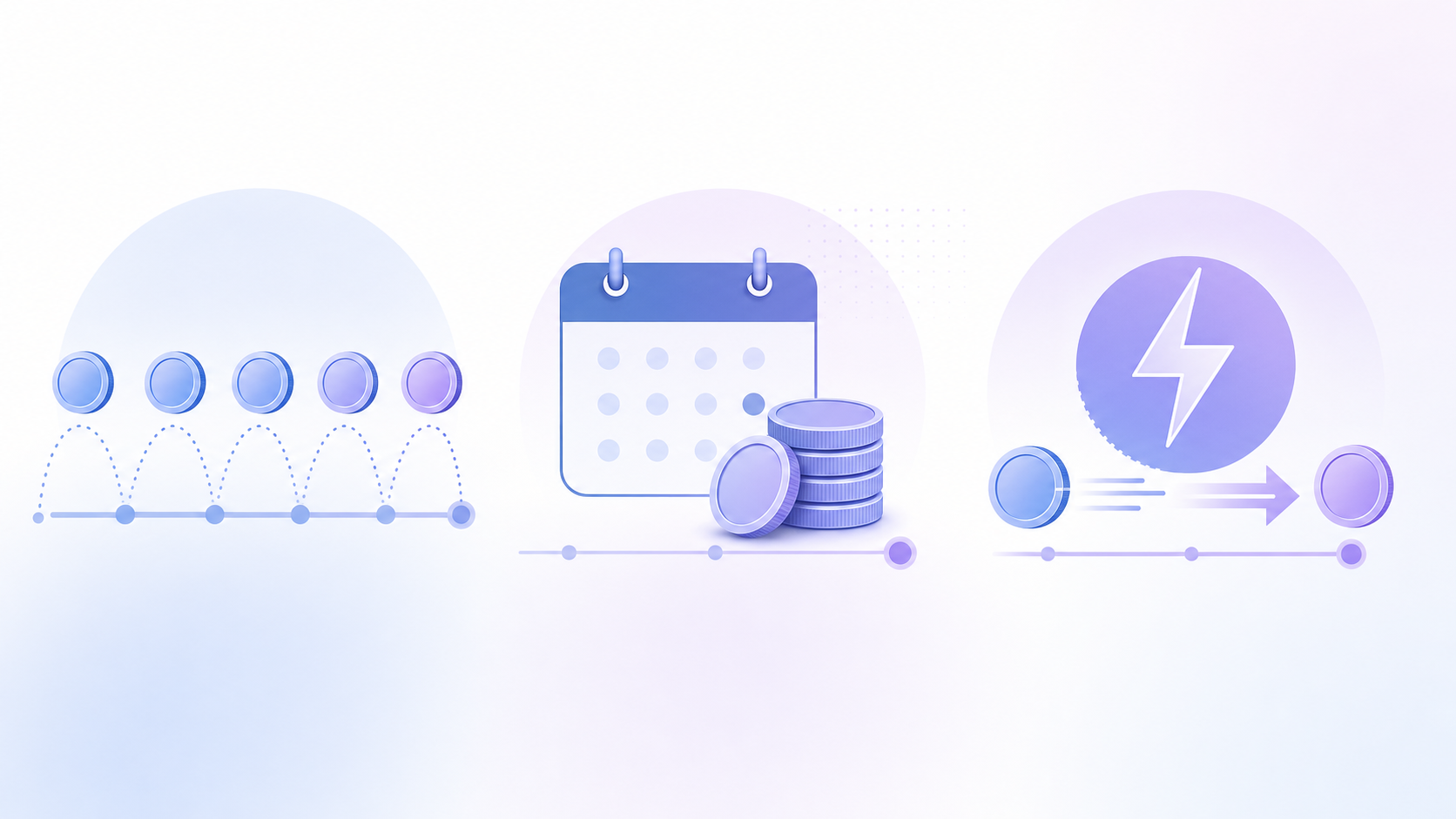
Daily Batch Payouts
Daily disbursements group transactions into one bank file. This relies on strict cutoffs. Missed deadlines roll transfers to the next business day.
Fixed Weekly Cycles
A weekly schedule releases aggregated earnings on a set day. Services enforce minimum balance thresholds, typically $25 to $50, before triggering a transfer, carrying unmet balances forward to the next cycle. This cadence gives risk and compliance teams a multi-day window to run KYC checks and flag suspicious transactions before funds exit the ledger. The trade-off is predictability over speed: creators know exactly when to expect payment, but they wait longer between disbursements than daily or real-time models allow.
How Payout Timing Shapes Creator Retention and Trust
Disbursement speed drives creator retention. Creators face immediate business costs and expect a creator payout sla that matches the pace of their daily expenses. If your service delays income, creators move their audience to competing services. Fast payouts are critical for gig workers, and over 33% of the U.S. labor force now identifies as independent workers, making disbursement speed a core product feature, not an afterthought. Fast payouts and creator retention are directly linked.
Industry data shows that faster access to earnings is a top driver of creator loyalty on your service: gig workers and independent creators consistently rank payment speed above features like analytics dashboards or promotional tools. When a weekly payout window forces a creator to bridge expenses with a credit card or short-term loan, the interest cost becomes a direct tax on using your service. Services that move to daily or on-demand disbursement see measurable drops in creator churn, because the financial friction disappears.
Payout Cadence Decisions Across Major Creator Services
Structuring a creator payout sla depends on internal constraints, not creator preference. A typical payout cadence design weighs several core variables:
- Risk posture and exposure to fraud across various refund windows.
- Reconciliation requirements to process disputes and close accounting books.
- Tech limits regarding how fast systems route and clear funds.
These factors shape vastly different creator payment frequency models across the industry, as outlined in our guide to global payouts. On services such as Patreon and Substack, monthly or bi-weekly cycles dominate because subscriber billing aligns with those intervals and fraud review windows are baked into the cadence. Gig-economy services like Fiverr and Upwork typically offer weekly disbursements with an optional instant-transfer fee, trading speed for a small per-transaction cost that the creator absorbs. Marketplace services with high refund rates (think ticketing or e-commerce) hold funds for seven to fourteen days to cover chargeback exposure before any transfer clears.
Compliance and Tax Implications of Payout Cadence Design
A creator payout SLA cannot override federal law. Accelerating your creator payment frequency shrinks your compliance window.
Since funds cannot move without proper documentation, your payout cadence design determines how fast you execute mandatory checks:
- Clearing KYC (Know Your Customer) screens before routing funds.
- Securing a W-9 for a domestic earner's TIN (Taxpayer Identification Number) and automating 1099 and W-8BEN collection via payout infrastructure
Fraud Risk and Hold Periods in SLA Design
A fast creator payout SLA introduces tension with fraud prevention. Hold periods define the exact window between a creator earning funds and a service disbursing them. This delay allows for transaction screening, chargeback reconciliation, and global watchlist verification.
Longer payout cadence design buffers this risk. Weekly schedules give risk teams time to catch suspicious activity before money exits the ledger, unlike just-in-time funding models that push funds at the moment of disbursement. Real-time transfers erase that buffer. If you want sub-minute settlement in your creator payout SLA, move screening upstream: gate disbursements behind completed KYC verification and watchlist checks at onboarding, not at the point of transfer. That way your fraud controls remain intact without adding latency to the payout itself.
Cross-Border Payout Complexity and SLA Commitments
International payees complicate your creator payout SLA. Fast domestic creator payment frequency does not automatically transfer to cross-border disbursements. Settlement timelines depend on the rail and recipient country.

Regions run on distinct clearing infrastructure. A standard SWIFT transaction takes multiple business days and carries a $25 to $65 sender fee per transfer, a cost your creators absorb unless your SLA explicitly covers it. Local rail alternatives like SEPA in Europe or Faster Payments in the UK settle in hours and eliminate most of those fees, but they require country-specific banking integrations your infrastructure must support. Your creator payout SLA should define separate cadence tiers by region, specifying the rail, expected settlement window, and fee responsibility for each geography, instead of applying a single global commitment that domestic rail speeds cannot back internationally.
Key Components a Creator Payout SLA Should Specify
A strict creator payout SLA (Service Level Agreement) documents exact execution mechanics. Lock in these core clauses:
- Cadence and cutoffs: Detail the exact creator payment frequency and the daily cutoff hour required for immediate batch processing.
- Minimum thresholds: Set the dollar amount needed to trigger a transfer and outline how unmet balances carry over.
- Fallback logic: Map your routing hierarchy, accounting for ACH vs. instant rails economics.
SLA Breach Remediation and Dispute Handling
When a transfer misses its expected creator payment frequency, your creator payout SLA must define the financial remedy. Publish commitments openly, detailing communication protocols for delays and specific documentation payees need to file claims.
A predictable payout cadence design includes defined compensation paths:
- Automatic service credits for network outages where engineering flags impacted users instantly, supported by processes that eliminate manual CSV data entry.
- Manual dispute reviews for routing errors requiring compliance checks before releasing funds.
How Dots Supports Creator Payout SLA Execution at Scale
A written creator payout sla fails without capable routing architecture. We built Dots to make ambitious payout cadence design reality, moving $3bn+ to over 1 million payees.
Handle creator onboarding KYC and tax setup, including W-9 and W-8BEN requirements, without adding latency. Webhooks block premature withdrawals, giving your service the foundation to support tiered, jurisdiction-aware commitments.
SLA Component | Dots |
|---|---|
Payment cadence | Daily batch, weekly, or real-time: configurable per payee tier or region |
KYC & tax compliance | W-9 and W-8BEN collection gated by webhook; funds blocked until forms are verified |
Cross-border routing | Local rails (SEPA, Faster Payments) where available; SWIFT fallback with transparent fee disclosure |
Fraud & watchlist screening | OFAC and global watchlist checks run at onboarding, not at disbursement, preserving settlement speed |
Breach remediation | Webhook events flag impacted payees instantly; audit trail supports service-credit and dispute workflows |
Final Thoughts on Creator Payout SLA and Cadence Design
A creator payout SLA is a commitment, and your payout cadence design is how you keep it. The details that matter most: cutoff windows, hold periods, compliance checks, and cross-border routing. All live beneath the surface of a simple payment date. Get those right, and fast payouts stop being a differentiator and start being a baseline your creators depend on. Talk to Dots to see how the infrastructure behind that commitment actually works.
FAQ
Daily vs. weekly payout cadence: which is better for creator retention?
Daily payouts win on retention when your creators face recurring business costs, but they shrink your fraud review window to hours instead of days. Choose daily if your risk stack can screen transactions in near real time; choose weekly if you need buffer time for chargeback reconciliation or compliance checks before funds exit the ledger.
What should a creator payout SLA actually specify?
A creator payout SLA should lock in at least four things: the exact payment frequency and daily cutoff time, minimum balance thresholds that trigger a transfer, fallback routing logic when a primary rail fails, and defined remediation paths (service credits or manual dispute review) when a disbursement misses its window. Vague commitments around payout cadence design create support overhead and erode creator trust faster than slow payouts do.
How do I build a real-time payout SLA without creating fraud exposure?
Real-time payouts remove the hold period that risk teams use to catch suspicious activity, so the screening has to move upstream. Gate payouts behind completed KYC verification and tax-form submission using webhook events, and run watchlist checks at onboarding, not at disbursement. That way your creator payout SLA can commit to seconds-level settlement without leaving a gap for fraudulent withdrawals.
Can I promise the same creator payment frequency to international payees as domestic ones?
No. Domestic real-time rails like RTP and FedNow settle in seconds, but cross-border transfers depend on the recipient's country and clearing infrastructure. A standard SWIFT transfer takes multiple business days and carries a $25 to $65 sender fee, so your SLA should define separate cadence tiers by region, not a single global commitment that domestic rail speeds cannot back up internationally.