Creator W-9 Backup Withholding Rules for 2026 (July 2026)

A missing W-9 is more than a paperwork gap: it triggers IRS backup withholding automatically, cutting 24% from your creator's payout before it ever reaches them. Creator backup withholding applies the second a payment clears without a valid Taxpayer Identification Number on file, and missing W-9 payouts can stack up fast across a large roster. The rules around when this kicks in shifted in 2026, so it's worth knowing exactly where the new thresholds land.
TLDR:
- Backup withholding is a flat 24% IRS deduction that triggers when a creator skips submitting a W-9.
- A $1,000 payout becomes $760 when withholding activates; you reclaim the $240 via Box 4 on your 1099 at tax time.
- The 2026 One Big Beautiful Bill Act raises the 1099-NEC filing floor from $600 to $2,000, shifting when withholding kicks in.
- If the IRS issues a CP2100 B-notice for a TIN mismatch, submit a corrected W-9 immediately to stop deductions.
- Dots automates W-9 collection and real-time IRS TIN matching via API, blocking withholding exposure before earnings cross IRS thresholds.
What Backup Withholding Is
Backup withholding is a mandatory 24% tax deduction. The IRS backup withholding rules force paying services to subtract this flat rate from reportable disbursements. The rule triggers immediately when an independent contractor fails to supply a valid Taxpayer Identification Number (TIN), a unique identifier assigned by the IRS or Social Security Administration, directly impacting missing W-9 payouts.
This mechanism operates entirely apart from standard employee tax deductions. While regular paycheck withholding scales against individual tax brackets, backup withholding is a blunt, flat 24% cut applied regardless of the creator's income level or filing status. It is not a tax in itself: it is a prepayment held by the IRS until the payee files their annual return. Critically, the liability for deducting and remitting this amount falls entirely on the paying business, not the creator.
What Triggers Backup Withholding on Creator Payouts
Tax law mandates businesses collect payee details before distributing funds. When an independent contractor forgets their form before the first transfer, the deduction activates immediately. This oversight is the main trigger for creator backup withholding, resulting in missing W-9 payouts.
Beyond unreturned forms, four conditions force a paying service to deduct taxes:
- The payee fails to supply a Taxpayer Identification Number before a payment clears.
- The IRS notifies the paying service that the TIN on file does not match its records, triggering a CP2100 B-notice that requires immediate deductions on all future payments.
- The payee has a documented history of underreporting interest or dividend income, and the IRS has formally notified the payer to begin withholding.
- The payee fails to certify that they are not subject to backup withholding when completing their W-9, leaving the paying service without the documentation needed to release full disbursements.
The 24% Backup Withholding Rate Explained
When a missing form triggers creator backup withholding, the IRS forces paying businesses to deduct exactly 24% from the gross payment. This flat penalty ignores filing status and total income bracket completely.
Consider a $1,000 contractor invoice:
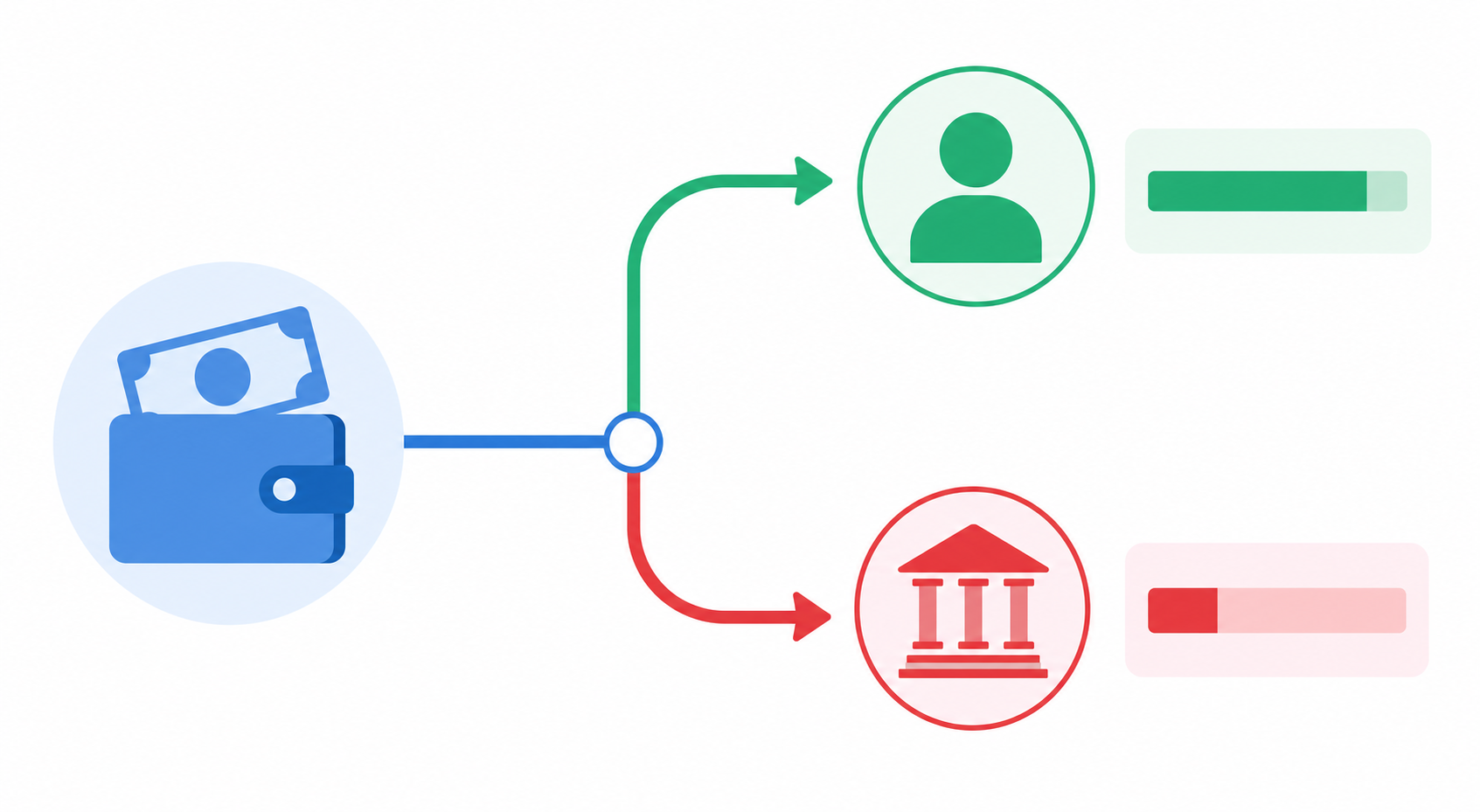
- The recipient receives only $760 instead of their full expected earnings.
- The remaining $240 goes directly to the IRS, held as a prepayment against the creator's annual tax liability.
Creator Payments Subject to Backup Withholding
The IRS mandates creator backup withholding for any 1099 payment lacking valid tax details. Missing W-9 payouts fall into three specific categories.
Non-employee compensation (Form 1099-NEC)
Sponsors paying directly for contracted work require your tax details, collected on Form 1099-NEC, to prevent invoice deductions.
Royalties and other income (Form 1099-MISC)
Platforms that distribute royalty income (licensing fees, music streaming payouts, or revenue-share arrangements) must collect a W-9 before releasing funds. A missing form triggers the same 24% deduction on the gross royalty amount. Because royalty payments often recur monthly, a single uncollected W-9 can compound the withholding exposure across an entire payment cycle before the creator realizes funds are being docked.
Backup Withholding: Payments Subject vs. Exempt
Category | Payment Type | Form | Subject to Backup Withholding? |
|---|---|---|---|
Non-employee compensation | Sponsored content, contracted creator work | 1099-NEC | Yes: 24% withheld if W-9 is missing |
Royalties & other income | Licensing fees, streaming payouts, revenue-share | 1099-MISC | Yes: 24% withheld on gross royalty amount |
C corporations & S corporations | Any payment to a registered corporation | N/A | No: exempt by entity type |
Tax-exempt organizations | Any payment to a recognized exempt org | N/A | No: exempt by status |
Foreign payees | International creators with valid W-8BEN/W-8BEN-E | W-8BEN / W-8BEN-E | No: subject to separate 30% FATCA/Chapter 3 rate (treaty rates may apply) |
Payments Exempt from Backup Withholding
Not every payment triggers creator backup withholding. IRS rules exclude select entity types from this penalty, but contractors working as sole proprietors do not qualify. You must supply tax details to avoid missing W-9 payouts.
Paying entities skip this deduction for:
- Registered C corporations and S corporations with recognized tax standing
- Organizations maintaining recognized tax exempt status
- Foreign payees holding valid W-8BEN or W-8BEN-E certifications, which confirm non-U.S. tax status and move withholding obligations to the FATCA and Chapter 3 framework instead. These payees are subject to a separate 30% withholding rate under IRC §1441 unless a tax treaty reduces it, and the paying service must collect the appropriate W-8 series form before releasing any funds.
The 2026 Threshold Changes Creators and Paying Services Should Know
Two 2026 tax updates determine when missing forms trigger creator backup withholding. The One Big Beautiful Bill Act raises the 1099-NEC floor from $600 to $2,000. Paying services are not required to file a 1099-NEC or withhold until cumulative payments to a single contractor cross that higher threshold within a calendar year. Creators earning between $600 and $1,999 in 2026 fall below the new reporting floor, changing when withholding exposure begins. Paying services must update their W-9 collection triggers and withholding logic to reflect this new limit before it affects live payout flows.
The IRS B-Notice: What Happens After a TIN Mismatch
When a paying service files a 1099 with details failing to match IRS records, the agency issues a CP2100 or CP2100A notice. This directive forces the payer to initiate creator backup withholding immediately.
The government operates on a strict two-notice system:
- First B-notice: You must submit a corrected W-9 within 15 business days of receiving the notice. Until the paying service receives the corrected form, it must begin withholding 24% from all future payments. A second B-notice, issued when the same TIN mismatch recurs within three calendar years, triggers a stricter resolution path: the payee must obtain a Taxpayer Identification Number validation letter directly from the IRS or Social Security Administration before withholding stops. Submitting another corrected W-9 alone is not sufficient for a second notice.
How to Stop Backup Withholding Once It Starts
Halting the 24% tax deduction on your payouts requires correcting missing or mismatched information immediately. Your resolution path depends on the original trigger.
- Submit a completed W-9 form with an accurate Taxpayer Identification Number to the paying service. This fixes unreturned forms or TIN typos.
- Resolve underreporting notices directly with the IRS. A new form fails here. You must pay owed balances and file any missing returns before the agency closes the withholding order. Contact the IRS directly using the reference number on the notice, settle outstanding amounts, and obtain written confirmation that the withholding requirement has been lifted before expecting full payouts to resume.
How Creators Reclaim Backup-Withheld Taxes
Deducted funds from missing W-9 payouts remain entirely recoverable. You reclaim this money during normal tax season by applying the withheld amount against your total tax liability. Understanding the W-9 vs 1099 form distinction helps clarify where each document fits in this process.
To recover the cash:
- Locate Box 4 on your year-end 1099. This field displays the exact amount subtracted for creator backup withholding.
- Report this recorded figure as federal income tax paid when filing your annual return. Enter the Box 4 amount on your Form 1040 as federal tax already withheld, which offsets your total tax liability dollar-for-dollar. If the withheld amount exceeds what you owe, the IRS issues the difference as a refund. Keep your year-end 1099 on file as documentation in case the IRS requests verification.
What Paying Services Owe When Backup Withholding Applies
Paying creators transfers the tax compliance burden to your business. If a payee provides an invalid Taxpayer Identification Number and you skip deductions, you assume the liability.
The IRS enforces three payer-side rules:
- Begin deductions immediately when a TIN is absent.
- Deposit subtracted funds via Form 945.
- Record the deducted amount in Box 4 of each contractor's year-end 1099-NEC or 1099-MISC. This figure is what the payee uses to reclaim withheld funds when filing their annual return. Failing to populate Box 4 accurately exposes the paying business to penalties under IRC §6722 (IRS information return penalties) and moves the reconciliation burden onto the creator, who cannot recover withheld funds without it.
How Dots Handles Backup Withholding for Creator Payouts
We built Dots to handle regulatory hurdles, moving $3bn+ to over 1 million payees.
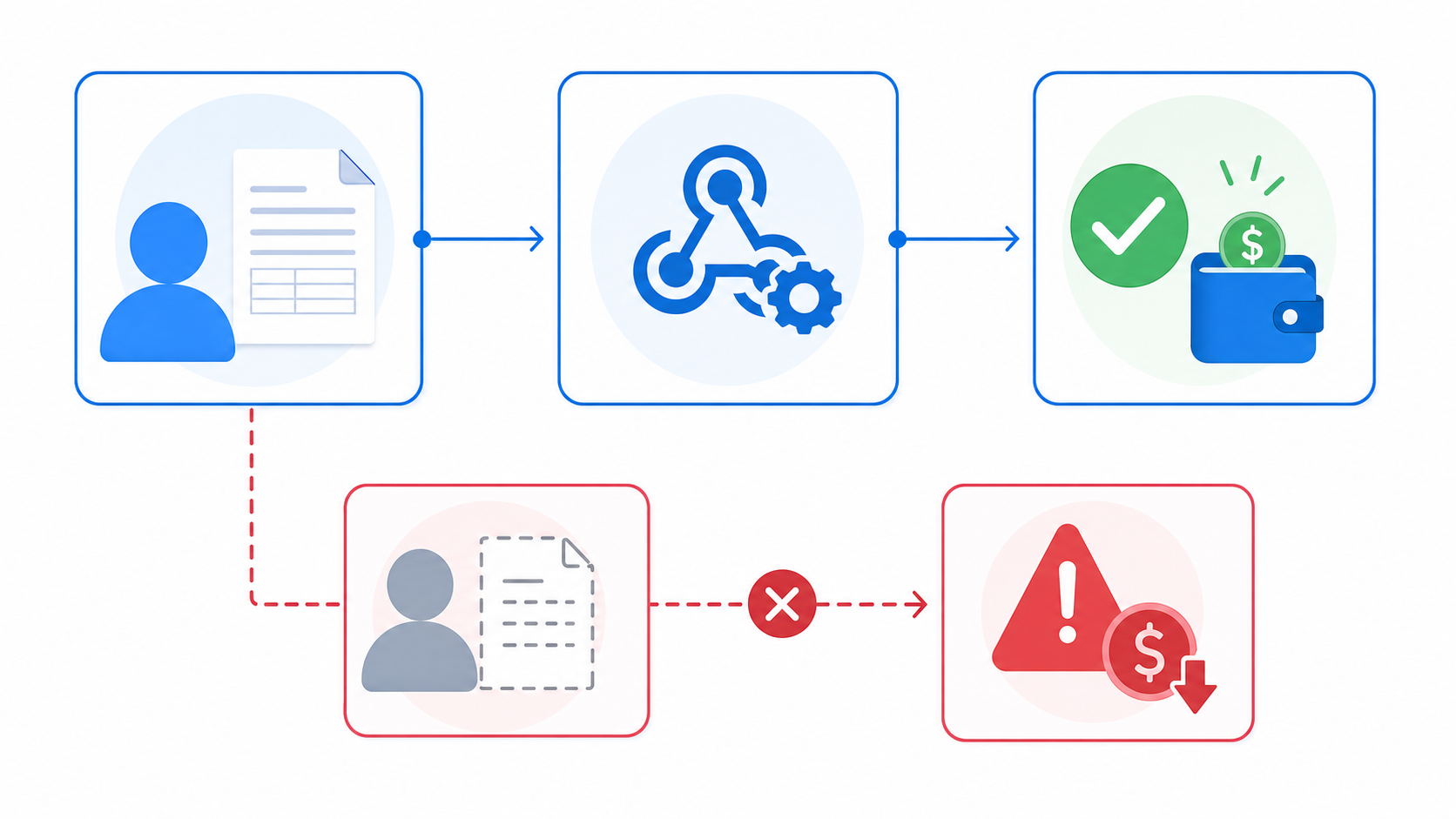
Instead of building custom deduction logic, our API automates W-9 collection and real-time IRS TIN matching. Webhooks trigger form collection before earnings cross IRS limits, blocking creator backup withholding exposure and missing w-9 payouts entirely.
Dots collects W-8BEN certifications during onboarding for international creators, confirming non-U.S. tax status before the first payment clears. This moves the withholding framework from IRS backup withholding to the FATCA and Chapter 3 regime and applies any applicable tax treaty rate automatically. The result: your payout flow stays compliant for both domestic and international payees without manual intervention on your end.
Final Thoughts on W-9 Collection and Backup Withholding for Creators
Your best defense against backup withholding is a valid W-9 on file before any payment leaves the payer. The rules are clear, the fix is simple, and the cost of skipping it is a guaranteed 24% cut from every payout. Connect with Dots to see how automated form collection blocks the problem before it starts.
FAQ
What is creator backup withholding and when does the 24% rate apply?
Creator backup withholding is a mandatory IRS deduction that kicks in when an independent contractor fails to supply a valid Taxpayer Identification Number (TIN) before a payment clears. The rate is a flat 24% on the gross payment: on a $1,000 payout, the creator receives $760 and $240 goes directly to the IRS, regardless of the creator's income bracket or filing status.
How do I stop IRS backup withholding once it starts on my creator payouts?
Submit a completed W-9 with an accurate TIN to the paying service. This resolves withholding triggered by an unreturned or incorrect form. If the IRS issued a B-notice due to a TIN mismatch, you must follow the two-notice resolution process; a new W-9 alone does not close a second B-notice, and any unpaid balances must be settled directly with the IRS before withholding stops.
Can I build a payout system that blocks missing W-9 payouts before the IRS threshold is crossed?
Yes. Dots uses webhooks that fire when a creator submits a W-9 or W-8BEN, triggering form collection before cumulative earnings reach IRS reporting limits. This event-driven model stops backup withholding exposure at the source instead of correcting it after the fact.
Dots vs. building custom deduction logic: which handles IRS backup withholding compliance better for creator services?
Building custom deduction logic requires your team to track TIN status, manage B-notice timelines, gate payouts, and file Form 945 separately. Dots automates W-9 collection, real-time TIN matching, and W-8BEN certification for international creators in a single onboarding flow, moving $3bn+ to over 1 million payees without manual compliance intervention.
What is the 2026 1099-NEC threshold change and how does it affect when backup withholding kicks in for creators?
The One Big Beautiful Bill Act raises the 1099-NEC reporting floor from $600 to $2,000, which moves the point at which missing W-9 payouts trigger backup withholding exposure for many creator payments. Creator services and paying businesses need to update their withholding logic and W-9 collection triggers to reflect this new threshold before it affects live payout flows.